Best Clear Deck Stain for a Backyard Family Deck
A clear-eyed comparison of six clear deck sealers, ranked by what actually keeps a deck dry, unfaded and easy to recoat next spring.

By Dexter GillUpdated 15 min read
On this page
- How I narrowed six clear sealers from a crowded field
- Best clear deck stain at a glance
- What clear really means on a deck
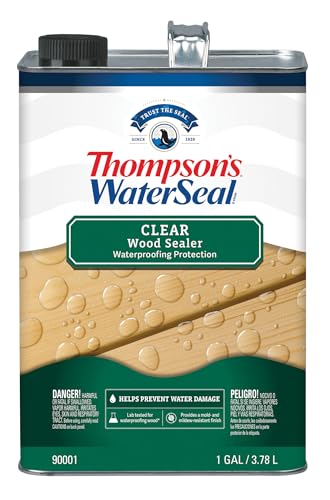
- 1. Thompson's WaterSeal Clear Wood Sealer — Best overall
- 2. DEFY Extreme Crystal Clear Outdoor Wood Stain and Sealer — Runner-up
- 3. Thompson's WaterSeal Multi-Surface Waterproofer Stain — Best budget pick
- 4. SEAL-ONCE Marine Penetrating Wood Sealer and Waterproofer — Best premium
- 5. Ready Seal Exterior Wood Stain & Sealer — Best for beginners
- 6. Seal-Once Nano+Poly Wood Sealer and Waterproofer — Best for heavy use
- How long will a clear sealer actually last?
- Application: sprayer, brush or roller?
- What to check before you open the can
- The verdict
- FAQ
The best clear deck stain for most homeowners is Thompson's WaterSeal Clear Wood Sealer, a 1 gallon can that dries clear, cleans up with soap and water, and doubles for concrete and brick. If your deck sits in full sun and fading is the real worry, DEFY Extreme Crystal Clear is the better buy because the brand cites zinc nano-particles for UV blocking. Both are the same 1 gallon size, so the deciding factor is exposure, not coverage.
How I narrowed six clear sealers from a crowded field
Clear deck stain is a crowded shelf, and most listings look identical at a glance: clear, waterproof, 1 gallon, brush or spray. I worked profile-first instead. A backyard deck under trees, a sun-baked south-facing deck, a lakeside dock and a family deck with dogs and patio furniture are four different problems, and the winning can changes for each.
I mapped the six picks to those profiles first, then checked the published specifications and manufacturer claims to confirm the match. The screen looked like this:
- Every pick had to be sold as clear or crystal clear on the label.
- Every pick had to state suitability for exterior wood, not just fences or siding.
- Every pick had to be a 1 gallon can, so coverage would compare fairly.
- Every pick had to publish at least a model number, a size and a dimension figure, because a listing without basic specifications is a listing you cannot compare.
Six survived, one for each profile in this guide. A quick note on the keyword: "clear deck stain" is what shoppers type, but most of these are penetrating sealers with no pigment. That matters, and I return to it below.
Best clear deck stain at a glance
| Pick | Best for | UV claim | Price |
|---|---|---|---|
Best overall Thompson's WaterSeal Clear Wood Sealer |
Standard backyard decks | Not stated on listing | Check Price |
Runner-up DEFY Extreme Crystal Clear |
Sunny, fade-prone decks | Zinc nano-particles claim | Check Price |
Best budget pick Thompson's WaterSeal Multi-Surface |
Deck, brick, fence in one buy | Fade-resistant polymers claim | Check Price |
Best premium SEAL-ONCE Marine Penetrating |
Docks and lakeside decks | UV-stable coating claim | Check Price |
Best for beginners Ready Seal Exterior Wood Stain |
First-time DIYers | Not stated on listing | Check Price |
Best for heavy use Seal-Once Nano+Poly |
High-traffic family decks | UV-stable coating claim | Check Price |


What clear really means on a deck
Here is the trick with the phrase "clear deck stain": most of these products are penetrating sealers, not pigmented stains. A pigmented stain relies on tinted particles to shield wood from ultraviolet light. A clear sealer has no pigment to hide behind, so its UV story is different, and it is usually shorter.
Read the listings closely and you see it. Thompson's WaterSeal Clear Wood Sealer says it "helps maintain natural color, dries clear" and mentions water damage. It says nothing on the listing about UV. DEFY Extreme calls out zinc nano-particles specifically for UV blocking. Ready Seal talks about no lap marks and moisture resistance but does not describe UV protection in its listed features. SEAL-ONCE and Seal-Once Nano+Poly both cite a UV-stable coating.
That split is your first filter. If your deck sits in full sun, a can that mentions UV in its own claims is worth more than a can that does not. If your deck is shaded, the UV question matters less and water beading and easy cleanup matter more.
1. Thompson's WaterSeal Clear Wood Sealer — Best overall
A no-drama 1 gallon can that seals wood, brick and concrete, dries clear and cleans up with soap and water.
Best for: a standard backyard deck that needs simple water protection Skip it if: you want a stated UV package on the label
This one wins by fitting the widest set of situations without over-promising. The can is 1 gallon, measures 10.3 x 6.63 x 4.19 in, and carries model number TH.090001-16. Thompson's says it dries clear and helps prevent water damage, and lists concrete, brick, masonry and wood as suitable surfaces. That range matters because most decks share a footprint with a poured slab, a set of stairs, or a brick edge, and one can that handles all three saves a trip.
Two set-level facts push it to the top. It is the second-cheapest of the six, and it is the one buyers choose most often here by a clear margin. Three sellers list it, which is more than most of the picks. The trade-off is honest: the listing does not describe a specific UV package, so a south-facing deck may need earlier recoating than a shaded one. For a typical yard, that is the right compromise at this price position.
Pros:
- Dries clear per the manufacturer
- Rated for concrete, brick, masonry and wood
- Soap and water cleanup
- Second-cheapest can in this set
- Three sellers stock it
Cons:
- No UV claim on the listing
- No published warranty
- Category listed under sealers, not stains
2. DEFY Extreme Crystal Clear Outdoor Wood Stain and Sealer — Runner-up
A crystal clear penetrating sealer that puts its UV story front and centre, with a zinc nano-particle claim on the listing.

Best for: sunny decks where fading is the main worry Skip it if: you need soap-and-water cleanup from a big-box shelf
DEFY is the pick for a deck that bakes. The listing says zinc nano-particles block harmful UV rays to prevent sun damage, and calls out graying and weathering as the specific problems it targets. That is a sharper claim than most clear sealers make on their labels, and it is the reason DEFY earns a place ahead of the cheaper Thompson's variant for exposed decks.
The specifications back up a serious formula. The 1 gallon jug measures 12.5 x 7.5 x 3.2 in, model 300158, and DEFY says it is made in the USA. Application is flexible: sprayer, brush or roller per the brand, with soap and water cleanup and reapplication when water absorption becomes visible. The listing describes it as versatile for decks, fences and outdoor furniture.
The trade-off is availability and price. Only one seller lists it, and it sits in the middle of the price positions here, so it costs more than the Thompson's overall pick. If you have a shaded deck, that premium is not earning its keep. For a sun-blasted deck, it is the smarter buy.
Pros:
- Zinc nano-particle UV claim from the brand
- Made in USA per the listing
- Sprayer, brush or roller application
- Rated for decks, fences and siding
- Soap and water cleanup
Cons:
- Only one seller lists it
- Costs more than the Thompson's pick
- Slower seller than the two Thompson's cans
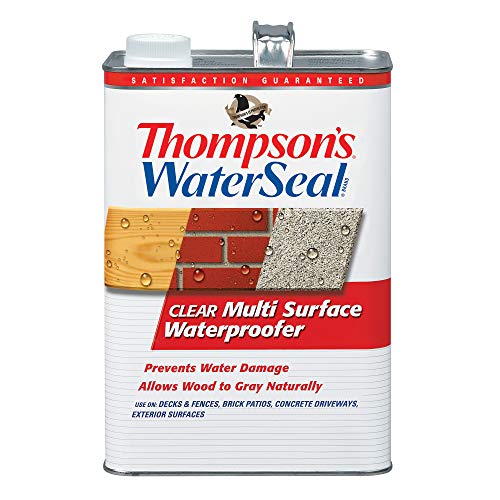
3. Thompson's WaterSeal Multi-Surface Waterproofer Stain — Best budget pick
The cheapest can in this set, marketed as a stain rather than a pure sealer, and rated for wood, concrete and brick.
Best for: mixing deck, brick patio and fence in one weekend Skip it if: you want an oil-look finish
This is the cheapest of the six and it is the pick when the project is not just the deck. Thompson's says this multi-surface waterproofer is proven for concrete, brick, exterior wood and other exterior surfaces, and it is one of only two cans in this set that carry any warranty language, listed as "Satisfaction Guaranteed". The can is a 1 gallon size at 10.3 x 6.63 x 4.19 in, model TH.024101-16.
The brand describes the finish as clear, hiding the grain while letting the texture show, and calls out advanced polymers for fade resistance. That is a softer UV claim than DEFY's, but it is still on the label, which puts this ahead of the flagship Thompson's for a deck with any real sun exposure. Two sellers list it.
The trade-off against the Best overall pick is subtle. This is marketed as a stain and the flagship as a sealer, but both dry clear. Choose this one when the project is broad. Choose the flagship when it is a deck-only job and you want the widest seller pool.
Pros:
- Cheapest of the six
- Fade-resistant polymer claim
- Rated for concrete, brick and wood
- Satisfaction guaranteed language on the listing
- Clear finish that lets texture show
Cons:
- No specific UV mechanism named
- Not the fastest seller of the two Thompson's cans
- Category listing does not match the "stain" label wording
4. SEAL-ONCE Marine Penetrating Wood Sealer and Waterproofer — Best premium
A water-based marine-rated penetrating sealer built for docks, boards near water, and saltwater spray.

Best for: docks, lakeside decks and boards that stay wet Skip it if: you only need protection from ordinary rain
If the deck touches water, this is the can. SEAL-ONCE calls it a UV-stable coating built for the elements, saltwater spray and constant moisture on wood used at boat docks, decks and retaining walls near rivers, lakes, oceans and ponds. It is water-based and described as ultra-low VOC. The jug weighs 8.8 lb, measures 7 x 9 x 9 in, model 7614.
Two things separate this from the general-duty picks. The formula is described as penetrating the wood at the cellular level, forming a flexible, breathable barrier rather than a topcoat. And the marine wording is specific: saltwater spray, docks, retaining walls. That is not generic waterproofing prose. It is targeted.
The trade-offs are the price position and the availability. It is the most expensive pick here and only one seller lists it, so you are paying a premium for a formula aimed at a niche. For a lakeside dock, that premium is the point. For a garden deck under an oak tree, it is money you can put back in your pocket by choosing Thompson's.
Pros:
- Marine and saltwater spray claim
- UV-stable coating claim
- Water-based and ultra-low VOC per the brand
- Penetrates rather than topcoats per the brand
- Same 1 gallon coverage as the rest
Cons:
- Most expensive pick here
- Only one seller lists it
- Overkill for a standard backyard deck
5. Ready Seal Exterior Wood Stain & Sealer — Best for beginners
A goof-proof formula that Ready Seal says requires no back brushing, no wet-line application and no sanding for reapplication.

Best for: a first-time DIYer nervous about lap marks Skip it if: you want a fast-selling, widely stocked can
Lap marks are what wreck a first deck-staining job. Overlap a wet edge with a dry one and you get a visible stripe that only shows up as the finish dries. Ready Seal's answer, per the brand, is a formula that requires no back brushing and no wet-line application, and that will blend itself across the surface. The can also says it can withstand rain within minutes of application and can be applied in direct sunlight, which removes two more failure modes for a beginner.
Specifications: 1 gallon, 7 lb, 7.5 x 6.5 x 6.5 in, model 100. Three sellers stock it, and the listing carries a warranty entry. Ready Seal says reapplication needs no sanding or stripping, which lowers the bar again for the second coat next season.
The honest weakness is where this pick sits in the popularity data: it is the slowest seller of the six by a wide margin, so it is a less familiar brand on the shelf. That is not evidence of quality either way. It just means fewer neighbours will have used it.
Pros:
- No back brushing per the brand
- Rain-tolerant within minutes per the brand
- Direct sunlight application per the brand
- No sanding needed for recoat per the brand
- Warranty language on the listing
Cons:
- Slowest seller of the six
- Category listed under wood polish rather than stains
- No specific UV mechanism named on the listing
6. Seal-Once Nano+Poly Wood Sealer and Waterproofer — Best for heavy use
A penetrating water-based sealer Seal-Once positions for high-traffic areas, with a gloss finish and UV-stable claim.

Best for: high-traffic decks with kids, pets and furniture drag Skip it if: you want the lightest can in the set
Family decks take a beating. Chairs slide, dogs skid, planters get dragged from spot to spot, and a thin surface film wears through where the traffic is heaviest. Seal-Once positions the Nano+Poly for exactly that: top-notch protection against wear and tear in high traffic areas, per the brand, suitable for wood siding, log homes, swing sets and outdoor furniture as well as decks. The can weighs 8.73 lb, measures 9 x 7 x 7 in, model SOP 500G.
Two claims sit at the centre of the pitch. First, the sealant penetrates below the surface rather than forming a topcoat, which the brand says builds a flexible, breathable barrier. Second, it is described as a premium gloss with ultra-low VOC and a UV-stable coating. Cleanup is soap and water per the brand.
The trade-offs against SEAL-ONCE Marine are worth naming. This one is a step down in price position but still on the premium side, and only one seller lists it. If you are protecting a dock, choose the Marine. If you are protecting a family deck with furniture, this is the closer match.
Pros:
- High-traffic positioning from the brand
- UV-stable coating claim
- Ultra-low VOC per the brand
- Penetrating rather than topcoat per the brand
- Soap and water cleanup
Cons:
- Only one seller lists it
- Second-most expensive pick here
- Heaviest can in this set at 8.73 lb
How long will a clear sealer actually last?
None of these listings publishes a specific service life, and that is normal for the category. What they publish instead is a recoat trigger. DEFY says to reapply when water absorption is visible, meaning when water stops beading and starts soaking in. Ready Seal says reapplication needs no sanding or stripping. Both Seal-Once cans describe penetrating formulas that do not need to be scraped off.
The practical rule is the water-drop test. Every spring, flick water on the deck. If it beads, you are fine. If it darkens the wood, it is time to recoat. A clear sealer on a shaded deck usually stretches the interval. Full sun and heavy foot traffic shorten it. The two Seal-Once picks and DEFY name UV mechanisms in their claims, which is the closest thing to a longevity story you get on a clear-finish label.
Application: sprayer, brush or roller?
Method matters more than most beginners think. Here is how the six picks describe application:
- DEFY Extreme: sprayer, brush or roller, per the brand.
- Ready Seal: sprayer, roller or brush, no back brushing needed, per the brand.
- SEAL-ONCE Marine: water-based formula, described as easy application.
- Seal-Once Nano+Poly: water-based, soap and water cleanup.
- Thompson's WaterSeal Clear Wood Sealer: brush and roller wording, soap and water cleanup.
- Thompson's WaterSeal Multi-Surface: described as easy to apply.
A quick note on tools. A sprayer covers a big deck fast and gets into board gaps, but it also overspray onto siding and plants, so mask off first. A roller handles the field of the deck efficiently but stops at railings and balusters. A brush is slow but the most forgiving. A first-timer using Ready Seal or one of the Thompson's cans will usually get a cleaner result with a brush on rails and a roller on the deck field. Two coats, wet on damp, is standard practice for penetrating sealers.
What to check before you open the can
Two-minute checklist before you crack the lid:
- Is the deck clean and dry? Sweep, then wash with a deck cleaner, then wait at least 24 hours for a fully dry surface.
- Is the weather cooperating? Ready Seal accepts rain within minutes per the brand, but most sealers want a dry window.
- Do you have masking tape and drop cloths for siding and plants?
- Do you have the right nap roller and a decent brush for edges and rails?
- Have you tested a small patch on an out-of-sight board? A clear sealer on old wood can darken it slightly as the surface gets wet.
- Do you have soap and water ready for spills? Every one of the six picks in this guide cleans up that way, per the brands.
Skip the patch test and you may not like how a weathered board absorbs the finish. Test once, then commit.
The verdict
The best clear deck stain for most homeowners is Thompson's WaterSeal Clear Wood Sealer. It dries clear per the brand, cleans up with soap and water, handles wood, brick, concrete and masonry, and sits at the second-cheapest price position in this set. It is the one buyers choose most often here for a reason: the fit is broad and the risk is low.
Two conditions flip the pick. If your deck sits in full sun and fading is your real complaint, DEFY Extreme Crystal Clear is the better buy because the zinc nano-particle UV claim is more specific than anything on the Thompson's label. If your deck touches water, docks, lakesides or heavy salt spray, SEAL-ONCE Marine is the pick because the marine claim is exactly the problem you have.
The other three fill sharper roles. Thompson's Multi-Surface is the cheapest option and the choice when the project spans deck, brick and fence. Ready Seal is the beginner's forgiveness can. Seal-Once Nano+Poly is the family-deck workhorse for heavy furniture and pet traffic. Every pick here is a 1 gallon can, so coverage is not the deciding factor. Exposure and use are.
FAQ
Is a clear deck stain worth it over a pigmented one?
A clear deck stain is worth it when you want to keep the natural look of the wood and protect it from water. The trade-off is UV protection: pigmented stains rely on tint to block sunlight, so a clear finish needs a stated UV mechanism, like DEFY's zinc nano-particle claim, to compete on fade resistance. For shaded decks, clear is a fine choice.
How does DEFY Extreme compare with Thompson's WaterSeal Clear Wood Sealer?
DEFY Extreme compares with Thompson's on UV. Both are 1 gallon clear cans that clean up with soap and water. Thompson's is the second-cheapest here and the widest-selling. DEFY sits mid-range on price with only one seller and names zinc nano-particles for UV blocking. For a shaded backyard deck, Thompson's wins on value. For a sunny deck, DEFY's UV claim earns its premium.
Can I use SEAL-ONCE Marine on a regular backyard deck?
You can use SEAL-ONCE Marine on a regular backyard deck, but it is engineered for docks, lakeside boards and saltwater spray. The listing describes constant moisture as its target problem. If your deck is a normal above-ground structure that only sees rain, you are paying the premium price position in this set for capability you will not use. Thompson's is the smarter pick there.
How long does a clear deck stain last before recoating?
How long a clear deck stain lasts depends on exposure, traffic and coats applied. None of these six listings publishes a specific interval. DEFY says to recoat when water absorption is visible, meaning when water stops beading. That is the reliable trigger. Ready Seal and both Seal-Once cans say no sanding is needed for recoating, so the maintenance path stays simple year to year.
What is the best clear deck stain for a beginner?
The best clear deck stain for a beginner is Ready Seal Exterior Wood Stain & Sealer, because Ready Seal says it needs no back brushing, no wet-line application, and no sanding for recoat. It also accepts rain within minutes per the brand, which removes weather anxiety. The trade-off is that it is the slowest seller of the six here, so it is a less familiar brand on the shelf.
Choosing a clear finish for your deck comes down to a simple question: what is trying to ruin it, water, sun, or wear? Thompson's WaterSeal Clear Wood Sealer is the sensible default because a typical backyard deck fights all three at low intensity, and the flagship handles that mix without the price premium the more specialised cans carry. Pick your can, wash the boards, wait a dry day, and get two coats down while the weather holds. Next spring, flick water on the deck. If it beads, you did the job right and the same brand will still be there when you need it again.