Best Varnish for Exterior Wood Doors: Rust-Oleum Wins

A ranked shortlist of five spar and polyurethane finishes for a south-facing front door, with the specs, the trade-offs, and the pick that suits each situation.

By Dexter GillUpdated 15 min read
On this page
- Best varnish for exterior wood doors at a glance
- How the shortlist was built
- 1. Rust-Oleum Marine Spar Varnish — Best overall
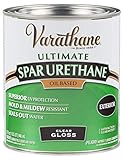
- 2. Varathane Outdoor Spar Gloss Urethane (250041H) — Most versatile
- 3. Varathane Outdoor Spar Gloss Urethane (242180H) — Best upgrade
- 4. Furniture Clinic Wood Varnish — Best budget pick
- 5. Valspar Man O' War Spar Varnish — Best premium
- Oil-based spar or water-based urethane?
- What actually kills a door finish
- How many coats and how much varnish?
- Matte, satin or gloss on a front door?
- What the listings do not tell you
- The verdict
- FAQ
The best varnish for exterior wood doors is Rust-Oleum Marine Spar Varnish, an oil-based spar that dries to the touch in 2 hours, covers up to 150 sq ft per quart, and is rated by the maker for UV, salt and mildew. Get it wrong and a south-facing door starts crazing inside a summer, the finish clouds after the first hard rain, and you are stripping to bare wood by the second spring. Varathane Outdoor Spar Gloss Urethane is the better call if you want a low-odour water-based coat that cleans up with soap and water.
Best varnish for exterior wood doors at a glance
| Pick | Base and cure | Key claim | Price |
|---|---|---|---|
Best overall Rust-Oleum Marine Spar Varnish |
Oil-based 2 hr touch-dry |
150 sq ft/qt UV, salt, mildew |
Check Price |
Most versatile Varathane Outdoor Spar Gloss Urethane (250041H) |
Water-based 30 min touch-dry |
87 sq ft/qt Non-yellowing claim |
Check Price |
Best upgrade Varathane Outdoor Spar Gloss Urethane (242180H) |
Spar urethane Self-levelling claim |
1 quart 2.23 lb can |
Check Price |
Best budget pick Furniture Clinic Wood Varnish |
Water-based Low VOC claim |
8.5 fl oz Matte |
Check Price |
Best premium Valspar Man O' War Spar Varnish |
Oil-based spar | 300-500 sq ft/gal claim Sun and weather |
Check Price |




How the shortlist was built
Five finishes made the cut. I set profiles first, then matched product data to them, because a front door and a garage door do not want the same coating.
The profiles were: a south-facing front door in full sun; a sheltered side door under a porch; a stained hardwood door where colour depth matters; a quick weekend refinish; and a high-abuse entry that sees kids, dogs and weather.
The screening rules were simple:
- The product listing had to state outdoor or exterior use.
- Specifications had to include size and either dry-time or coverage, so a reader could plan the job.
- The category path had to sit inside finishes or marine maintenance, not general cleaners.
That left the two spar varnishes (Rust-Oleum and Valspar Man O' War), two spar urethanes from Varathane, and one water-based general varnish from Furniture Clinic that is listed for doors on the label. Interior-only finishes were cut. Stains were cut. Anything without a stated size was cut.
One caveat before the picks. The search that produced this set is a broad varnish search, and not every product on Amazon that surfaces for "exterior wood doors" is formulated purely for a vertical exterior door in full weather. Read the can, and pair the finish with the exposure your door actually gets.
1. Rust-Oleum Marine Spar Varnish — Best overall
Rust-Oleum Marine Spar wins because its published spec sheet is the most honest fit for an exposed exterior door: oil-based, flexible, and rated for UV, salt and mildew.
Best for: a south-facing front door that needs UV, salt and mildew resistance Skip it if: you want a low-odour water clean-up finish
This is the finish designed for the job the keyword describes. Rust-Oleum lists it for exterior wood surfaces above the water line, and the maker states the oil-based formula expands and contracts with changing weather, which is what a door needs when the sun bakes it at 2 pm and the temperature drops 30 degrees by midnight. Coverage is listed at 150 sq ft per quart, and touch-dry is 2 hours. A standard exterior door is roughly 20 sq ft per face, so one quart is enough for two coats on both sides of a single door with margin for the edges and frame.
It is the second-cheapest of the five and the one buyers choose most often in this set, judging by category rank. The trade-off against Valspar Man O' War is a smaller published coverage figure. The trade-off against the two Varathanes is oil-based clean-up: mineral spirits, not water. The listed model is 207008, quart, gloss clear.
Pros:
- Oil-based flex claim suits temperature swings
- UV, salt and mildew resistance stated on the listing
- 2-hour touch-dry lets you recoat the same day
- 150 sq ft per quart covers two full coats on a door
- Second-cheapest of the five
Cons:
- Solvent clean-up, not soap and water
- Gloss only in this SKU, no satin option
- Oil-based films can amber over pale woods
- Marine category listing rather than door-specific
2. Varathane Outdoor Spar Gloss Urethane (250041H) — Most versatile
The water-based Varathane is the pick for a weekend refinish where low odour and soap-and-water clean-up matter more than maximum film thickness.

Best for: a weekend refinish where soap-and-water clean-up matters Skip it if: you want the deepest amber colour on stained oak
This is the 32 oz brushable can, model 250041H, 2.2 lb. Varathane says the top coat is weather and UV resistant, does not yellow, and protects against mold and mildew. Touch-dry is 30 minutes with a 2-hour recoat window, and coverage is stated at 87 sq ft per quart. That is less coverage than the Rust-Oleum, so a two-coat job on both faces of a door is close to the limit of one can.
What earns it the versatile label is the listing scope: the maker calls it out for furniture, doors, windows, fences and trim, so a leftover half-can from the door has real second-life uses. Water clean-up is the other reason to reach for it, especially if you are painting on a still summer day and want the odour down.
Against Rust-Oleum, the loss is coverage per quart and the toughness of an oil film in driving rain. Against the premium Valspar, the loss is the sheer weather rating. Against the budget Furniture Clinic, the gain is a gloss finish and a stated non-yellowing claim.
Pros:
- 30-minute touch-dry, 2-hour recoat
- Water-based clean-up with soap and water
- Non-yellowing claim on the listing
- Listed for doors, windows, fences and trim
- Low-odour formula for indoor-adjacent work
Cons:
- Only 87 sq ft per quart, less than Rust-Oleum
- Water-based film is thinner than an oil spar
- Gloss only in this SKU
- Sells slower than the Rust-Oleum in its category
3. Varathane Outdoor Spar Gloss Urethane (242180H) — Best upgrade
The 242180H can is Varathane's self-levelling spar urethane in a 1-quart size, and it is the upgrade if you value a smooth flow-out over the top coat.

Best for: a self-levelling second-coat finish over a stained door Skip it if: you need published coverage figures to plan the job
Varathane lists this model for outdoor wood projects, with an expand-and-contract claim, and highlights self-levelling and fast-drying as the reason to pick it. Self-levelling matters on a door because brush marks show at eye level in raking morning light, and a coating that flows out is a coating that hides small application sins. The can is a 1-quart size, 2.23 lb, model 242180H.
It sits at the premium end of this shortlist and is the second-slowest seller of the five, which is worth naming because a slower-moving SKU can mean older stock; check the batch date when the can arrives. The listing here is thinner than the 250041H entry, with no stated coverage or dry-time, which is the honest reason to prefer the other Varathane if you need to plan out a two-coat schedule to the hour.
Against Rust-Oleum, the trade is less published data for a self-levelling claim. Against the Man O' War, it is a lighter feature list.
Pros:
- Self-levelling claim helps hide brush marks
- Fast-drying per the listing
- Quart size fits a single-door job
- Spar urethane formula flexes with weather
- Same brand family as the 250041H if colours match
Cons:
- No published coverage or dry-time figure
- Slower-moving SKU in its category
- Premium position for a thin spec sheet
- Feature bullets read as marketing headlines
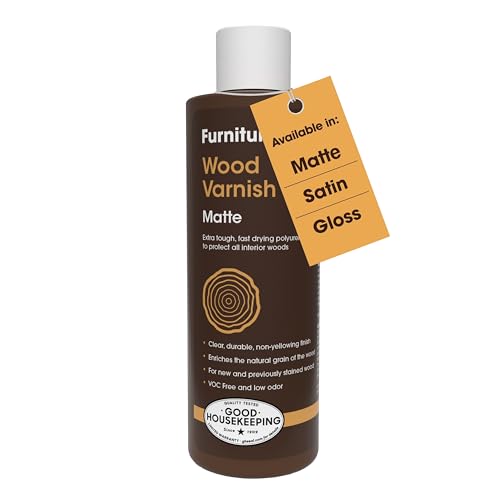
4. Furniture Clinic Wood Varnish — Best budget pick
Furniture Clinic's matte water-based varnish is the cheapest of the five and the right choice for a sheltered side door or for the interior face of a door where matte suits the room.
Best for: a small side door or interior-side coat where matte suits the room Skip it if: the door faces full afternoon sun and driving rain
This is an 8.5 fl oz bottle, 0.61 lb, model WV-250-MATTE. Furniture Clinic calls it a polyurethane waterproof coating and lists it for doors, baseboards, furniture and indoor woods. It is water-based with a low VOC claim, which makes it easy to use on a door still hung in the frame with the family home. Matte is unusual on an exterior door and it is the reason this pick works better on the inside face, or on a sheltered side door under a deep porch where the low sheen reads as modern rather than flat.
The listing does not commit to a full exterior weather-exposure claim in the same way the two spar varnishes do, and there is no stated warranty. Treat this as an interior-plus-sheltered product, not a full weather coat for a door that faces west with no overhang.
Against every other pick, the win is price and odour. The loss is film thickness and UV rating: a matte water-based varnish in an 8.5 oz bottle is not what you brush onto a beach-house front door.
Pros:
- The cheapest of the five
- Low-VOC water-based formula
- Matte finish rare in this category
- Listed for doors and baseboards
- Small bottle suits a single face or edge
Cons:
- 8.5 fl oz is small for a full door
- No stated warranty on the listing
- Matte on a full exterior door reads flat
- Weather claim thinner than the spar options
5. Valspar Man O' War Spar Varnish — Best premium
Man O' War is the finish Valspar builds for entry ways, garage doors and sills, and it is the pick when you want an oil spar with the longest published coverage figure in this set.

Best for: an entry door, garage door or sill that sees hard sun and weather Skip it if: you want a quart-size can with published dry-time on the listing
Valspar lists this as an outdoor finish with extra protection from sun and weather, and calls out entry ways, garage doors and sills by name. Coverage is stated at 300 to 500 sq ft per gallon, which is a wider range than the two Varathanes publish and lines up with a traditional oil spar spread across large door faces. Model 80-7509. Dimensions 4.4 x 3.1 x 5.7 in.
The spec sheet is shorter than Rust-Oleum's, without a listed touch-dry time, and the category rank puts it as the slowest seller of the five. Two things follow. First, check the batch date on arrival. Second, do a small compatibility test on an offcut if you are recoating over an unknown existing finish, because oil spars over water-based films can bead if the surface is not properly scuffed.
Against Rust-Oleum, the win is the door-specific listing and the higher coverage figure. The loss is published dry-time and a thinner overall spec sheet.
Pros:
- Listed by name for entry ways and garage doors
- 300 to 500 sq ft per gallon coverage claim
- Oil-based spar formula for hard weather
- Extra sun and weather protection claim
- Recognised name in exterior finishes
Cons:
- No listed touch-dry or recoat time
- Slowest-moving of the five in its category
- Shorter spec sheet than Rust-Oleum
- Oil solvent clean-up required
Oil-based spar or water-based urethane?
This is the split that decides most of the shortlist. An oil-based spar varnish, like Rust-Oleum and Valspar Man O' War, cures to a thicker, more flexible film and carries higher UV and weather claims on its listing. It smells strong, cleans with mineral spirits, and ambers over time on pale woods. That amber is a feature on oak and mahogany and a bug on maple.
A water-based spar urethane, like the two Varathanes, dries faster, cleans up with soap and water, and Varathane lists a non-yellowing claim on the 250041H can. The film is thinner coat for coat, so most water-based schedules ask for one more coat than the oil version to reach the same protection.
Here is the trick with an exterior door: exposure matters more than chemistry. A door under a 4 ft porch overhang can be finished in almost anything and last. A south or west-facing door with no overhang wants the thickest, most UV-rated oil spar you are willing to brush, applied in three coats with a light sand between each. If the door faces north, or lives under shade, the water-based Varathane earns its place on odour and clean-up alone.
What actually kills a door finish
Most guides compare gloss levels and brand names. That is not what decides how long the finish lasts. Three failure modes do the real damage:
- UV. Sunlight breaks down the resin and the wood underneath. A finish without a stated UV claim, on a sunny door, will chalk inside a year. Rust-Oleum and Valspar both name UV in the listing.
- Movement. A wood door swells in July and shrinks in January. A brittle film cracks along the grain. Rust-Oleum's expand-and-contract claim and the Varathane 242180H's self-levelling behaviour both point at this.
- Water sitting on the bottom edge. The single most common failure I see. Water wicks into unfinished end grain along the bottom rail, lifts the finish from underneath, and the door blackens.
The fix for the third one is not a better varnish, it is finishing all six sides of the door before you rehang it. Top edge, bottom edge, both faces, both long edges. Take the door off the hinges, lay it flat, and paint the edges first. The listings will not tell you this and it is the single biggest reason a good finish fails on a bad prep.
How many coats and how much varnish?
A standard 36 x 80 in door is roughly 20 sq ft per face, so 40 sq ft for both faces and about 5 sq ft more for edges and frame. Call it 45 sq ft per coat.
Three coats is the working rule for an exposed exterior door. That is 135 sq ft of coverage. Here is how the picks read against that number:
- Rust-Oleum Marine Spar at 150 sq ft per quart: one quart covers three coats on one door, edges included, with almost nothing spare.
- Varathane 250041H at 87 sq ft per quart: one quart covers two coats. Buy two quarts for a three-coat schedule.
- Valspar Man O' War at 300 to 500 sq ft per gallon: at the low end that is roughly 75 to 125 sq ft per quart, so plan for two quarts on a three-coat job.
- Varathane 242180H and Furniture Clinic: no published coverage, so buy by feel and keep receipts.
Sand lightly with 320-grit between coats. Wipe with a tack cloth. Do not thin the first coat unless the can tells you to.
Matte, satin or gloss on a front door?
Gloss shows off wood grain and hides dirt better than matte, because dirt sits on the surface instead of catching in a textured film. Four of the five picks are gloss. That is not coincidence, that is what exterior finishes are usually formulated for.
Matte, like the Furniture Clinic pick, is a style choice. It works on a modern flat-slab door under a porch, on the interior face of a door, or on a garage service door where you do not want the finish to shout. It does not work on a heavily figured hardwood front door, because matte flattens the depth of the grain that made you pick the wood in the first place.
Satin sits in between and is the safest default if the can offers it. None of these five ships in satin as listed, so you are choosing gloss on the exterior face for four of the picks, or matte for the budget option.
What the listings do not tell you
A few things you will not find on the product pages, and should know before you brush.
- Cure time is not dry time. A door can be touch-dry in 2 hours and still be soft enough to dent from a doorknob strike three days later. Give the final coat a week before hard use.
- Substrate matters. Over an oily tropical hardwood like teak or ipe, oil spars can take longer to cure. Wipe the surface with a rag lightly damped in mineral spirits before the first coat.
- Temperature. Below about 50 F, water-based finishes do not coalesce properly and oil finishes crawl. Above about 85 F they skin over before they level. A shaded still morning is the window.
- Existing finish. Never brush an oil-based spar over a water-based film without a full scuff-sand and a test patch on the edge. The two chemistries can be compatible, or the new coat can crawl into fish-eyes.
None of the five listings walks through this. They cannot; a can has one label.
The verdict
There is a two-track answer here. If your door faces the weather, brush Rust-Oleum Marine Spar Varnish. The listing gives you a 2-hour touch-dry, a 150 sq ft per quart coverage figure, an oil-based flex claim, and UV, salt and mildew resistance called out by name. It is the second-cheapest of the five and the one buyers choose most often in this set. One quart covers three coats on a single door.
If your door is sheltered, or you are working with the family home and cannot air out solvent for a weekend, brush Varathane Outdoor Spar Gloss Urethane, model 250041H. Water clean-up, 30-minute touch-dry, non-yellowing claim, and a listing that names doors, windows, fences and trim.
The cutoff is exposure. Draw a mental line: does the door see more than four hours of direct sun a day, or does driving rain hit it at any point in the year? Above that line, oil spar. Below it, water-based urethane. Valspar Man O' War is the alternate oil spar when you want a door-specific listing and a wider coverage claim. Furniture Clinic is the small-bottle matte pick for interior faces or a sheltered side door. The Varathane 242180H is the self-levelling upgrade for anyone who has fought brush marks before.
FAQ
Is Rust-Oleum Marine Spar Varnish worth it for a front door?
Rust-Oleum Marine Spar Varnish is worth it for a front door that sees real weather. The oil-based formula carries an expand-and-contract claim, resistance to UV, salt and mildew, and a stated 150 sq ft per quart coverage. That is enough coverage for three coats on a single door and a quart is the second-cheapest option in this set of five.
What is the best varnish for exterior wood doors in full sun?
The best varnish for exterior wood doors in full sun is an oil-based spar with a stated UV claim. Rust-Oleum Marine Spar names UV, salt and mildew on the listing, and Valspar Man O' War names sun and weather protection. Both are gloss oil spars. Brush three coats, sand lightly between each with 320-grit, and finish all six edges of the door before rehanging.
Rust-Oleum Marine Spar or Valspar Man O' War for a garage door?
For a garage door, Valspar Man O' War lists entry ways, garage doors and sills by name and quotes 300 to 500 sq ft per gallon of coverage, which suits a wide flat panel. Rust-Oleum Marine Spar covers 150 sq ft per quart with a shorter published range but a fuller spec sheet, including a 2-hour touch-dry. Pick Valspar for the door-specific listing, Rust-Oleum for the tighter spec.
How many coats of varnish does an exterior door need?
An exterior door needs three coats on the exposed faces and edges. A standard door works out to roughly 45 sq ft per coat with edges included, so 135 sq ft across the schedule. Sand lightly with 320-grit between coats and wipe with a tack cloth. Finish the top and bottom edges before rehanging, because water wicking into unfinished end grain is the most common failure mode.
Can I use a water-based varnish on an exterior door?
You can use a water-based varnish on an exterior door if the exposure is moderate. Varathane Outdoor Spar Gloss Urethane, model 250041H, is water-based, dries to the touch in 30 minutes, and Varathane states it is UV resistant and does not yellow. Coverage is 87 sq ft per quart, so plan on two quarts for a three-coat job. Under a deep porch it will hold well.
Take the door off the hinges before you start. Every experienced finisher does this and every listing forgets to say it, because a door laid flat on sawhorses takes finish evenly, drains no runs, and lets you brush the top and bottom edges in the same session. Rust-Oleum Marine Spar is the default for a reason: the spec sheet is the fullest in this shortlist, the price sits second from the bottom, and the oil-based flex claim matches the way a real door moves through a year. Buy a quart, buy 320-grit paper, buy a good brush, and give yourself a still weekend.