Best Stained Glass Soldering Iron: YIHUA 928D-III Wins

A no-fluff comparison of six soldering irons for stained glass work, judged on wattage, tip range, temperature control and what the listings actually publish.

By Dexter GillUpdated 16 min read
On this page
- Best stained glass soldering iron at a glance
- How I narrowed six irons from a much longer list
- Wattage is not what decides a stained glass iron
- 1. YIHUA 928D-III Soldering Iron — Best overall
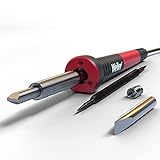
- 2. Weller 80W/120V Soldering Iron Kit with Power Grip — Most versatile
- 3. Hakko Soldering Iron for Stained Glass FX601 — Best premium
- 4. Q-MING Soldering Iron Kit — Best budget pick
- 5. Hakko FX601-02 Adjustable Temperature Controlled Soldering Iron — Best upgrade
- 6. Weller W100PG Farenheit Heavy Duty Soldering Iron — Best minimal setup
- What tip shape should you buy for lead came and copper foil?
- How long will a hobby iron actually last?
- What the listings quietly leave out
- The verdict
- FAQ
The best stained glass soldering iron is the YIHUA 928D-III, a 110W iron with a digital °F/°C display, an accurate 194 to 896°F range and four tips in the box. If you want a slimmer, more established handpiece and you already have a stand and cleaner, the Hakko FX601-02 at 67W with closed-loop temperature control is the better upgrade. Weight matters here too: the YIHUA lands at 6.95 oz and the Hakko around 0.57 lb.
Best stained glass soldering iron at a glance
| Pick | Wattage | Tip / temp control | Price |
|---|---|---|---|
Best overall YIHUA 928D-III Soldering Iron |
110W claim | Digital 194–896°F, 4 tips | Check Price |
Most versatile Weller 80W Power Grip Kit |
80W / 120V | Chisel, screwdriver, bent tips | Check Price |
Best premium Hakko FX601 for Stained Glass |
Not listed | Purpose-labelled for stained glass | Check Price |
Best budget pick Q-MING Soldering Iron Kit |
100W claim | Digital 356–932°F | Check Price |
Best upgrade Hakko FX601-02 Adjustable |
67W | Closed-loop dial control | Check Price |
Best minimal setup Weller W100PG Heavy Duty |
100W | Fixed-temp tips: 600/700/800°F | Check Price |



How I narrowed six irons from a much longer list
I started with what a stained glass soldering iron actually has to do: hold a stable tip temperature high enough to melt 60/40 or lead-free solder along a copper foil seam without pausing to reheat. That ruled out low-power hobby pens and any listing that did not publish either a wattage figure or a tip temperature range.
From there, the profile mapping decided the six picks. The buyer profiles I care about are:
- The beginner buying one box and expecting to start soldering the same evening.
- The hobbyist who already solders electronics and now wants to try glass.
- The returning solderer who wants a slim, known-good handpiece.
- The mixed-use maker doing beads, repairs, and the occasional stained glass panel.
- The traditionalist who prefers fixed-temperature tips.
- The upgrader ready to leave a plug-in-and-hope iron behind.
Each pick maps to one of those profiles. The best stained glass soldering iron for a first-timer is not the best stained glass soldering iron for someone rebuilding a workshop, so I refused to pretend one iron covers everyone.
Two things I did not use: star counts and prices. Amazon changes both hourly. What I compared was the published specification block, the tip options, and the warranty terms.
Wattage is not what decides a stained glass iron
Most guides open with wattage. Higher watts, better solder joint, done. That is not what actually decides it.
What decides a stained glass iron is tip temperature stability under load. When you drag a bead of solder along a two-foot foil seam, the tip cools every second it touches the joint. A 60W iron with closed-loop control will often outperform a 100W iron with none, because the closed-loop iron reheats the tip continuously rather than waiting for the element to catch up.
That is why the Hakko FX601-02 earns the upgrade slot at only 67W. Its listing describes an adjustable closed-loop temperature control with a sensor in the heater. The YIHUA 928D-III wins overall because it pairs the higher 110W claim with digital temperature correction and an on-off switch you can actually see the state of.
The specifications you want to compare in this category, in order:
- Adjustable temperature range in °F, not just a wattage figure.
- Whether temperature control is closed-loop or open-loop.
- Tip shape options: chisel and screwdriver tips lay a wider bead than a pencil tip.
- Handpiece weight, because stained glass sessions run long. Anything above about 0.7 lb starts to fatigue the wrist.
- Cord strain relief and stand compatibility.
Chase those five before you chase watts.
1. YIHUA 928D-III Soldering Iron — Best overall
A 110W iron with a full digital display, a four-tip kit and a stand in the box makes this the most complete starter buy in the set.
Best for: hobbyists who want digital temperature control and a full starter kit in one box Skip it if: you already own a soldering station and just need a bare iron
YIHUA claims a 110W element with an accurate range of 194 to 896°F, controlled from a clear digital display that reads in °F or °C. That range covers every stained glass solder alloy I know of, including lead-free. The listed weight is 6.95 oz, which is light enough for a long bead-running session. The listing bundles four tips (Type-B, K, 2.4D and 3.2D), an X-4 heat-resistant stand, a tip cleaner with brass wool and a cleaning sponge. YIHUA also states a 12-month US manufacturer technical coverage.
That inclusion list is the reason it beats the more expensive Hakkos for a first buy: the buyer of a first stained glass soldering iron does not yet own a stand or a brass cleaner, and the extras add up. The trade-off is that YIHUA is a less established name in stained glass circles than Weller or Hakko, and only two sellers list the iron, so replacement parts down the road are less certain than a Weller tip you can buy anywhere.
Pros:
- 110W element claim with a wide 194–896°F range
- Digital °F/°C display with on-off switch
- Four tip shapes plus stand and cleaner included
- Light 6.95 oz handpiece for long sessions
- 12-month manufacturer coverage stated
Cons:
- Only two sellers currently list it
- Newer name in stained glass than Weller or Hakko
- Wattage and temperature figures are manufacturer claims
2. Weller 80W/120V Soldering Iron Kit with Power Grip — Most versatile
Weller pairs an 80W iron with a chisel, screwdriver and bent-screwdriver tip family and backs it with a 7-year warranty, which is the longest published in this set.

Best for: makers who switch between stained glass beads and general home repairs Skip it if: you never plan to leave copper foil work
Weller lists this kit at 80W on 120V with an ergonomic power grip handle and a quick tip-change design. The listed dimensions are 1.8 x 12.5 x 5 in and the weight is 0.58 lb, so it sits between the slim Hakkos and the beefier W100PG in feel. Weller specifically calls out stained glass in its own marketing bullet, describing it as ideal for laying down a line of solder in stained glass or home repairs.
The tip range is what earns this the versatility slot. Chisel and screwdriver tips are the workhorses of copper foil work, and the bent-screwdriver option helps on awkward inside corners. A 7-year warranty is unusually long for a hobby iron and is the strongest published coverage of the six picks here.
The trade-off is heat control. Weller does not publish an adjustable temperature dial for this kit, so you manage heat by tip choice rather than by turning a knob. If you already know that copper foil work suits a specific tip and temperature, that is fine. If you are still learning, the adjustable Hakko or the digital YIHUA gives you more room to correct.
Pros:
- 80W element on 120V
- Full range of chisel and screwdriver tips
- Quick tip-change design
- 7-year warranty, the longest in this set
- Weller specifically markets it for stained glass
Cons:
- No adjustable temperature dial listed
- Heat control depends on choosing the right tip
- Only one seller currently stocks it
3. Hakko Soldering Iron for Stained Glass FX601 — Best premium
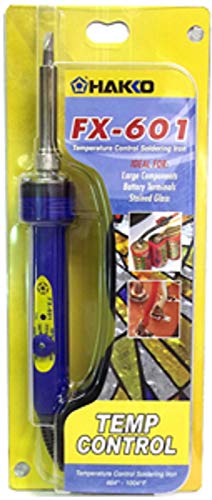
Hakko sells this variant of the FX601 with stained glass right in the product name, and the listing is the most expensive of the six.
Best for: returning solderers who trust the Hakko name and want a purpose-built iron Skip it if: you need a published wattage figure before you buy
This is the version of the Hakko FX601 that the seller has labelled specifically for stained glass, at 0.57 lb, and it is the most expensive pick here. Hakko's reputation in soldering is why it earns the premium slot: the FX601 platform has been in the range for years and the tips and heaters are broadly available.
The frustration with this specific listing is thin: the product page does not repeat the full specification block you get on the FX601-02 sibling, so wattage and temperature range are not on the page in the same way. If you already know the FX601 family and want the stained glass tip fitted from new, that is not a problem. If you are cross-shopping on paper, the FX601-02 upgrade pick below carries more published detail for a lower price position.
The trade-off is transparency. You are paying for the Hakko name and for the "for stained glass" configuration rather than for a longer specification sheet. For a returning solderer that is a fair exchange. For a first-time buyer it is not, and I would send that reader to the YIHUA.
Pros:
- Hakko FX601 platform with strong parts availability
- Sold explicitly configured for stained glass
- Slim handpiece at 0.57 lb
- Established brand across the soldering category
Cons:
- Highest price position of the six
- Wattage and temperature range not on the listing
- Fewer published specifications than the FX601-02
4. Q-MING Soldering Iron Kit — Best budget pick
The cheapest of the six ships as a kit with a digital display, a stand, solder wire, wick and flux paste for a first-time stained glass student.

Best for: first-time stained glass students testing whether the hobby sticks Skip it if: you want a category-appropriate iron rather than a soldering gun
Q-MING lists a 100W ceramic heating element with a claimed 15-second heat-up time and an LED display showing a temperature range from 180 to 500°C (356 to 932°F). The kit adds tips, wick braid, a stand, solder wire, a sponge and flux paste. The listed weight is 0.61 lb. There is even a password lock feature aimed at households with children.
It is the cheapest pick in the set and it sells faster than the rest of this set, which tells you buyers are finding it. The catch is the category: Amazon files this under Soldering Guns, not Irons, so it sits in a slightly different family from the other five picks. For copper foil beading on stained glass, a pencil-style iron is the traditional shape, and a soldering gun is a less common choice. Q-MING is on the list because the bundled kit lowers the total cost of entry for a beginner testing the hobby, not because it is the shape a professional would reach for.
If you know you will stay in stained glass, buy the YIHUA. If you are unsure and want the lowest-risk way in, this is the pick.
Pros:
- Cheapest of the six picks
- LED display with a wide 356–932°F range
- Full accessory kit including flux and solder wire
- Manufacturer claims a 15-second heat-up
Cons:
- Filed under Soldering Guns, not Irons
- Non-traditional shape for copper foil beading
- Brand recognition is thin
5. Hakko FX601-02 Adjustable Temperature Controlled Soldering Iron — Best upgrade
A 67W iron with closed-loop temperature control in a slim ergonomic handpiece is what most experienced stained glass solderers ask for.

Best for: solderers who want closed-loop temperature control in a slim handpiece Skip it if: you want a digital display instead of a dial
Hakko lists the FX601-02 at 67W with adjustable electronic closed-loop temperature control, a slender ergonomic handpiece and a temperature control sensor built into the heater. The listed dimensions are 1.5 x 10.1 x 3.9 in. The handpiece is the star of the specification: slim enough for tight foil work, with cord strain relief called out on the listing as durable construction.
Closed-loop control is the reason this earns the upgrade slot. A closed-loop iron reads the tip temperature many times a second and pushes power back into the element to hold the setpoint. On a long stained glass bead, that keeps the tip in the sweet spot even as heat drains into the copper foil. Open-loop irons like the fixed-tip Weller W100PG cannot self-correct in the same way.
The trade-off against the YIHUA 928D-III is real. The Hakko sits in the premium band, and it uses a dial rather than a digital display. If reading the exact number matters to you, the YIHUA wins. If steady tip temperature under load matters more, this is the better iron.
Pros:
- Closed-loop temperature control with in-heater sensor
- Slim, ergonomic handpiece
- Adjustable dial for setpoint changes
- Durable construction with strain relief called out
- Established FX601 platform
Cons:
- Premium price position in the set
- Dial rather than digital display
- Only one seller currently lists it
6. Weller W100PG Farenheit Heavy Duty Soldering Iron — Best minimal setup
A 100W iron with fixed-temperature tips at 600, 700 and 800°F strips the decision down to picking the right tip and going.
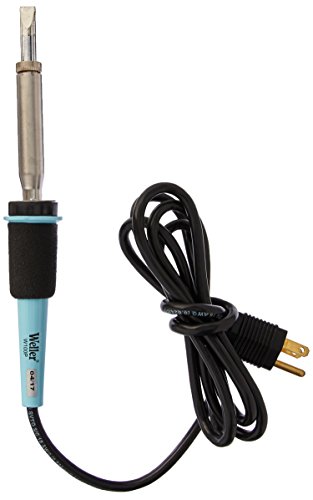
Best for: traditionalists who prefer fixed-temperature tips over adjustable dials Skip it if: you want to tune the heat mid-bead
Weller lists the W100PG at 100W with three swap-in tips rated to 600, 700 and 800°F, and a stated heat-up time of 110 seconds for the 700°F tip. The dimensions are 11.8 x 5 x 2 in and the weight is 0.6 lb. It uses Weller's closed-loop method to cap tip temperature and is called out as UL listed. There is no base station: this is a line-voltage iron that runs straight from the wall.
The appeal is philosophical. Instead of turning a dial, you match the tip to the job. A 700°F tip suits typical 60/40 stained glass solder; the 800°F tip helps on lead-free work; the 600°F tip is a lower-risk option for delicate seams. There is nothing to adjust wrong.
That same philosophy is the weakness. If a bead is running cold on a large panel because the copper foil is drawing heat away, you cannot dial the setpoint up. You have to stop, cool the iron, swap the tip, and reheat. For a hobbyist doing suncatchers this is fine. For a maker running large panels, an adjustable iron will finish faster.
Pros:
- 100W element with closed-loop tip control
- Three fixed-temperature tips: 600, 700 and 800°F
- 110-second heat-up time claim for the 700°F tip
- UL listed
- No base station required
Cons:
- No adjustable temperature dial
- Heat correction means a tip swap, not a dial turn
- No published warranty length
- Older platform than the Weller Power Grip kit
What tip shape should you buy for lead came and copper foil?
Tip shape is what your bead actually looks like, and most first-time buyers get this wrong.
For copper foil work, the shape that lays the flattest, smoothest bead is a chisel tip roughly 3.2mm wide, sometimes labelled 3.2D. It has enough thermal mass to keep the joint hot while you drag along the seam, and enough width to sweep the solder into a domed bead. The YIHUA 928D-III includes a 3.2D tip in the box, which is the right default.
For lead came work, where you are tacking joints between H-section came rather than beading a whole seam, a slightly finer chisel or a screwdriver tip works better. You want to deliver heat to a small target and pull away cleanly. The Weller Power Grip kit lists screwdriver and bent-screwdriver tips in its family, and the bent tip in particular helps on inside corners where you cannot get square to the joint.
A pencil-point tip is almost never right for stained glass. It is for electronics, where you are heating a single pin. On glass it drags rather than sweeps.
Buy the iron for the tip family you will grow into, not the tip that ships fitted from new.
How long will a hobby iron actually last?
The honest answer from the data in this set: the manufacturer will tell you the warranty length or they will not, and that is what you have to go on.
Weller publishes a 7-year warranty on the WLIRPK8012A Power Grip kit. That is the longest stated coverage in this comparison, and it aligns with Weller's reputation for parts availability. YIHUA states 12 months of US manufacturer technical coverage on the 928D-III. The two Hakkos and the W100PG do not publish warranty terms on the listings I read, and the Q-MING kit does not either.
Two shopping consequences fall out of that:
- If the warranty length is a large part of your decision, the Weller Power Grip kit wins on paper.
- If it is not, treat every iron in this set as a wear item. Tips oxidise, elements eventually fail, and the more important question is whether replacement tips are easy to buy for the platform you chose. Weller and Hakko both score well on that. The others are more of an unknown.
That is why I keep pushing new stained glass buyers toward established platforms even when the accessory bundle looks less generous.
What the listings quietly leave out
Three things you will not see in the specification blocks, and which matter more than you would expect:
- Cord length and flex. None of these six listings publishes a cord length. On a two-foot panel you feel it if the cord is short or stiff. Assume every stained glass session needs a mains extension nearby.
- Stand thermal capacity. The YIHUA bundles a stand rated as heat-resistant. The others may or may not include one. A cheap wire stand can droop under a 400°C tip, and that is not a specification the listing surfaces.
- Tip tinning behaviour. Copper foil work needs a well-tinned tip to draw solder cleanly. Some tips take tinning easily; some fight you. The listing will not tell you which.
None of these is a reason to reject a pick. They are reasons to budget for a proper stand, a length of extension, and a tin of tip cleaner on top of whatever the box includes. Only the YIHUA and the Q-MING publish a brass wool or sponge in the kit.
The verdict
The best stained glass soldering iron for most buyers is the YIHUA 928D-III. It is the most complete first buy in the set: a 110W claim, a digital 194 to 896°F range, four tips including the 3.2D chisel that copper foil work asks for, a heat-resistant stand, a brass wool cleaner and a 12-month manufacturer coverage statement. For a beginner it takes the whole opening-night decision off the table.
Two conditions flip the recommendation. If you already own a stand, a cleaner and a tip you like, and you want a proven platform with a slim ergonomic handpiece and closed-loop temperature control, buy the Hakko FX601-02 instead. The 67W element and heater-based sensor hold a stable tip temperature under load, which is what long beads need. If your work spans stained glass, home repair and the odd bead job, and warranty length matters, the Weller Power Grip kit with its 7-year coverage and chisel-and-screwdriver tip range is the wiser buy.
The Q-MING kit stays on the list for one reader only: the first-time student who wants the lowest-risk way to try stained glass before committing.
FAQ
What wattage soldering iron do I need for stained glass?
What wattage soldering iron suits stained glass depends on what you are joining, but 80 to 100W is the workable range for copper foil beading, and up to 110W helps on lead came. The YIHUA 928D-III claims 110W and the Weller W100PG lists 100W. Below about 60W you fight the copper foil drawing heat away from the tip.
Is the Hakko FX601 worth the premium over the YIHUA?
The Hakko FX601 is worth the premium if you already own a stand, a cleaner and a preferred tip, because you are paying for closed-loop temperature control in a slim, established handpiece. If you are starting from scratch, the YIHUA 928D-III bundles the extras and comes in below Hakko's price position, which is the better first-time buy.
Can I use a general electronics soldering iron for stained glass?
Can I use an electronics iron for stained glass? Sometimes, but the pencil tip and low wattage typical of electronics irons fight copper foil work. Stained glass wants a chisel tip around 3.2mm and enough wattage to keep the tip hot as heat drains into the foil. A 25W USB iron is not the tool. An 80W adjustable iron with a chisel tip is.
YIHUA 928D-III or Hakko FX601-02: which is right for me?
Choosing between the YIHUA 928D-III and the Hakko FX601-02 comes down to display versus dial. The YIHUA gives you a digital °F/°C readout, a higher claimed wattage and a full accessory kit for a lower price position. The Hakko gives you closed-loop control from a slim, proven handpiece. Beginners buy the YIHUA. Returning solderers with kit already on the bench buy the Hakko.
What is the biggest mistake first-time stained glass buyers make?
The biggest mistake first-time buyers make is chasing wattage instead of tip stability. A 100W iron with no temperature control can run hotter than a 67W closed-loop iron and still lay a worse bead, because the tip temperature swings as heat drains into the copper foil. Chase adjustable temperature control and a proper chisel tip before you chase the highest watt figure.
Stained glass rewards patience with the iron more than any other tool on the bench, so the right buy is the one that lets you stop fighting the temperature and start watching the bead. For most readers that is the YIHUA 928D-III, because it puts the temperature on a screen, ships with the right tip and stand, and asks you to learn one iron rather than a station and a stand and a cleaner bought separately. Set it to around 700 to 750°F for 60/40 solder, tin the 3.2D tip, and run a test bead on a scrap foiled square before you touch a real panel. The first clean bead is the moment the hobby starts.