Best Plaster Wall Anchors When You Can't Find a Stud

Five anchor kits compared on the spec that actually decides plaster jobs: how much wall thickness the anchor can span. Molly bolts, self-drilling zinc, and where each one fails.

By Dexter GillUpdated 15 min read
On this page
- Best plaster wall anchors at a glance
- How I screened these five kits down
- Molly bolt or self-drilling: which suits plaster?
- 1. JoblikeBrez Molly Bolts for Drywall Plaster Walls — Best overall
- 2. CrimsonMark 120PCS #8 Self Drilling Drywall Anchors and Screws — Best for pros
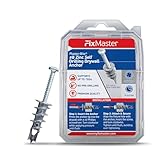
- 3. FixMaster Self Drilling Drywall Anchors Zinc with Screws — Best upgrade
- 4. KURUI Metal Self Drilling Drywall Anchors — Best minimal setup
- 5. Ansoon 50Pcs Metal Self Drilling Drywall Anchors — Best budget pick
- How thick is your wall, and why does it decide everything?
- What the listings don't tell you about plaster
- How many anchors does one job actually need?
- The verdict
- FAQ
The best plaster wall anchors here are the JoblikeBrez molly bolts, because they clamp a range of wall thicknesses from 0.12" to 1.28" rather than assuming one board depth. If your wall is modern plasterboard and you just need volume, the CrimsonMark 120-piece kit covers a whole punch list in one box. Most buyers compare holding figures first. That's the wrong number to start with.
Holding strength is a lab figure measured in board that behaves. Plaster doesn't behave. It's brittle, it sits over lath or over board of unpredictable depth, and it cracks in a cone around the hole when a threaded anchor forces its way in. The anchor style, and the wall thickness it can span, is what separates a fixing that holds from one that spins loose in a pile of dust.
Best plaster wall anchors at a glance
| Pick | Anchor style | Wall thickness / spec | Price |
|---|---|---|---|
| Metal molly bolt with setting tool |
0.12"-1.28" span 3 lengths, 34 pcs |
Check Price | |
| Ribbed self-drilling | 120 pcs, #8 x 1-1/4" 75 lb claim |
Check Price | |
| Zinc self-drilling | 3/8", 1/2", 5/8" 75 lb claim |
Check Price | |
Best minimal setup KURUI Metal Self Drilling Drywall Anchors |
Zinc alloy self-drilling | 116 pcs, size 6 screwdriver install |
Check Price |
Best budget pick Ansoon 50Pcs Metal Self Drilling Drywall Anchors |
Zinc self-drilling | 3/8", 1/2", 5/8" 25 pcs, No. 8 |
Check Price |




How I screened these five kits down
I lined up the published specifications side by side and threw out anything that couldn't state a wall thickness or a board range. That single filter does most of the work in this category.
What I looked at, in order:
- Wall thickness coverage. An anchor that only works in 1/2" board is a coin toss in a plaster house.
- Anchor mechanism. Does it clamp behind the wall, or does it thread into the wall material itself?
- Piece count against the job. A 25-piece box and a 120-piece box are not competing for the same buyer.
- What ships in the box. Screws included? A setting tool? A case?
- Length options. One length means one wall depth.
Two things I deliberately ignored. First, the holding figures in the marketing copy, because the manufacturers state them without naming a substrate and plaster is not the substrate they had in mind. Second, anything with only a size code and no dimensions, because "size 6" tells a buyer nothing about whether it reaches through their wall.
That left five kits. Four of them are self-drilling zinc anchors that thread into the board. One is a molly bolt kit that clamps from behind. The split matters more than any other difference here, and it's the reason the ranking looks the way it does.
Molly bolt or self-drilling: which suits plaster?
A self-drilling anchor is a fat threaded cone. You drive it straight in and its own thread cuts the hole. It's fast, and in gypsum board it's genuinely good. In plaster it has one problem: it needs the wall material to hold that thread. Brittle lime plaster over wood lath can crumble instead of gripping, and once it crumbles the anchor spins.
A molly bolt works differently. It goes through a pre-drilled hole, then a sleeve behind the wall folds outward and pulls tight against the back face. The wall material isn't being asked to hold a thread. It's being sandwiched. That's why the JoblikeBrez kit takes the top spot in a guide about the best plaster wall anchors, even though it's the most expensive pick here.
The trade-off is honest. Molly bolts need a drill, a correctly sized hole, and a setting tool to fold the sleeve. Self-drilling anchors need a screwdriver and about eight seconds. If your walls are post-1960 plasterboard with a skim coat, the speed wins and you should read the self-drilling picks first.
- Molly bolt: clamps behind, spans variable thickness, slower, needs a drill
- Self-drilling zinc: threads into board, very fast, depends on board integrity
- Either one fails if you hit wood lath instead of a cavity
1. JoblikeBrez Molly Bolts for Drywall Plaster Walls — Best overall
The only pick here that clamps behind the wall instead of relying on the plaster to hold a thread, and the only one with a stated thickness range.
Best for: old lath-and-plaster walls of unknown thickness Skip it if: you only need to hang a few lightweight frames
The number that earns this the top spot is the 0.12"-1.28" span. Nothing else here publishes a figure like it. The four self-drilling kits name board depths of 3/8", 1/2" and 5/8", which is a narrow window when you're drilling into a wall built before those standards existed. Plaster over lath can run well over an inch once you count the keys pushed through the gaps.
The kit ships 34 pieces in three lengths: 12 at M5x37mm, 12 at M5x52mm, 10 at M5x65mm. That's the mechanism by which the range works. You match the length to the depth you find when you drill your test hole, rather than hoping one size fits.
JoblikeBrez states 55 lbs as the ceiling and lists TVs, mirrors, curtain rods, towel racks and smoke detectors as intended uses. The setting pliers are described as 1" hardened carbon steel, with galvanised carbon steel bolts. That pliers tool matters: hand-tightening a molly with a screwdriver alone is how people end up over-cranking and blowing out the plaster face.
The trade-off against the rest of this set is quantity and speed. Thirty-four fixings and a stated 55 lbs sit below the 120-piece boxes and their 75 lb claims, and every single install needs a drilled pilot hole first.
Pros:
- Stated 0.12"-1.28" wall thickness span
- Three screw lengths for varying wall depths
- Setting pliers included, 1" hardened carbon steel
- Galvanised carbon steel described as rust resistant
- Clamps behind the wall rather than threading into plaster
Cons:
- Most expensive pick in this set
- Only 34 fixings, the smallest count here
- Stated 55 lbs sits below the 75 lb claims elsewhere
- Requires a drill and a correctly sized pilot hole
2. CrimsonMark 120PCS #8 Self Drilling Drywall Anchors and Screws — Best for pros
One hundred and twenty pieces with the fastest sales movement in this group, which is what a punch list of small mounts actually needs.

Best for: working through a punch list of small mounts Skip it if: your wall is brittle plaster over lath
This is the kit buyers reach for most often out of the five, and the reason is arithmetic. A 120-piece count with matched #8 x 1-1/4" screws means you don't stop mid-job to count what's left. Weight is 0.72 lb for the whole box, packed in a 0.7 x 8.58 x 6.1 in tray.
CrimsonMark describes strong ribs holding 75 lbs and says the anchor wedges tightly once the screw is in. Note the listed size field reads "Nylon" while the copy calls these ribbed hollow anchors, so the material description isn't as clean as the zinc picks here. If you specifically want metal, the FixMaster and KURUI kits state zinc outright.
Where it fits: bathroom and kitchen accessories, shelving, mirrors, picture frames. Small, repeated, medium-weight fixings on board that's in decent shape. That's the job it's built for and it does it cheaply per piece.
The honest limit is the mechanism. Like every self-drilling pick here, it asks the wall to hold a thread. On soft or crumbling plaster that request gets refused, and no rib design fixes it. The molly bolt kit exists for exactly that wall.
Pros:
- 120 pieces, the highest count in this set
- Matched #8 x 1-1/4" screws included
- Manufacturer states 75 lb holding strength
- The kit buyers here choose most often
Cons:
- Listed material reads "Nylon" while copy says ribbed hollow
- Self-drilling thread depends on sound board
- No wall thickness range published
- No setting tool or storage case
3. FixMaster Self Drilling Drywall Anchors Zinc with Screws — Best upgrade
Twenty-five zinc anchors in a hard plastic case, sized for #6 or #8 screws, for the buyer who wants one job done tidily.

Best for: one clean job with tidy storage afterwards Skip it if: you need more than 25 fixings
FixMaster sits mid-range for this set and spends the difference on two things: the case and the screw grade. The listing states 25 zinc anchors with 25 #8 x 1-1/4" high strength carbon steel screws, packed in a durable hard plastic case. Each anchor measures 1.25 x 1.25 x 0.3 in.
The board coverage claim is 3/8", 1/2" or 5/8", with a stated 75 lbs. That's the same window as the Ansoon and it's the standard self-drilling range. FixMaster also claims the anchors are reusable and removable without damaging drywall, which is unusual language for a threaded anchor and worth treating as the manufacturer's claim rather than a guarantee.
The size field reads "#6 or #8", giving you a little screw flexibility the other kits don't advertise. If you're mounting one thing properly and want the leftovers to still be findable in two years, the case is a real benefit. Loose anchors in a drawer get lost.
Against the two big assortment kits it loses on count by a wide margin. Twenty-five fixings against 116 and 120, at a higher position on the price ladder. You're paying for packaging and screw specification, not volume.
Pros:
- Hard plastic storage case included
- High strength carbon steel screws stated
- Fits 3/8", 1/2" and 5/8" board
- Works with #6 or #8 screws
Cons:
- Only 25 anchors, well below the assortment kits
- Costs more than the two entry picks for fewer pieces
- Reusability is the manufacturer's claim, not a spec
- No wall thickness figure beyond the three board sizes
4. KURUI Metal Self Drilling Drywall Anchors — Best minimal setup
One hundred and sixteen zinc alloy anchors installable with nothing but a screwdriver, which is the lowest tool barrier in this set.

Best for: a screwdriver-only install with no drill Skip it if: you want a case and a documented load figure
KURUI publishes a 116 count in size 6, silver, in a 0.74 x 8 x 7 in pack. It's the second-cheapest pick here and it moves nearly as fast as the CrimsonMark kit, which tells you plenty of buyers land on it.
The pitch is zinc alloy described as high strength with scratch and rust resistance, and threads that cut deep for a pull-out resistant grip. Critically, KURUI states installation with a screwdriver or screw gun. No drill, no pilot hole, no setting tool. If you don't own a drill, this is the only pick in the guide you can use tonight.
Read the fine print on load, though. KURUI calls these "recommended for medium-duty applications" and doesn't publish a pound figure anywhere. Compared to the 75 lb claims from CrimsonMark and FixMaster and the 55 lbs from JoblikeBrez, that's a gap in the data rather than a weakness in the product, but it means you're guessing at the ceiling.
The other missing piece is screws. The listing describes the anchors and mentions a wall anchor and screw kit in its feature copy, but the count field lists 116 without breaking out screws the way Ansoon and FixMaster do.
Pros:
- 116 pieces, second-highest count here
- Installs with a hand screwdriver, no drill needed
- Zinc alloy stated as scratch and rust resistant
- Second-cheapest pick in this set
Cons:
- No published holding weight, only "medium-duty"
- No wall thickness or board depth range stated
- Screw count not broken out in the listing
- No storage case
5. Ansoon 50Pcs Metal Self Drilling Drywall Anchors — Best budget pick
The cheapest of the five, with 25 zinc anchors and 25 matched No. 8 screws for a single small job.

Best for: a single shelf or towel rack on modern board Skip it if: you have a long list of fixings ahead
Ansoon is the entry point. The kit contains 25 zinc metal anchors and 25 #8 x 1-1/4" Phillips screws, packed in a slim 5.91 x 3.15 x 0.71 in card. Model ASANCHOR50.
Ansoon states the anchors pre-drill their own hole with no preparation required, and that the deep thread locks into 3/8", 1/2" or 5/8" gypsum wallboard. That's the same board window FixMaster quotes. Listed applications are hall, bathroom and kitchen accessories, artwork, shelving, mirrors, picture frames and curtain rods, which is the standard medium-duty spread.
What you don't get is a load figure. Ansoon publishes no pound number at all, so the only way to compare it against the 75 lb claims elsewhere is by mechanism and material, and on both counts it's a conventional zinc self-driller.
Buy this if the job is one towel rack and you want to spend the least. The reason it sits fifth rather than higher is simple value math: KURUI is barely more expensive and ships 116 pieces against these 25. Per fixing, the budget pick isn't the budget option unless 25 is genuinely all you need.
Pros:
- Cheapest of the five picks
- 25 anchors with 25 matched Phillips screws
- Covers 3/8", 1/2" and 5/8" wallboard
- Slim card packaging, easy to store flat
Cons:
- No published holding weight
- 25 pieces for close to what 116 pieces cost elsewhere
- Zinc self-driller with no distinguishing design feature
- No case or setting tool
How thick is your wall, and why does it decide everything?
Drill one test hole in an inconspicuous spot and measure. That five-minute step decides which anchor you buy, and skipping it is the single most common way this job goes wrong.
Here's why. Four of the five kits quote board depths of 3/8", 1/2" or 5/8". Those are gypsum board thicknesses. Genuine plaster construction, brown coat over lath with a finish coat on top, routinely runs thicker, and the plaster keys squeezed between the lath strips add depth you can't see. An anchor rated for 5/8" board in a 1" wall either bottoms out or never expands.
The JoblikeBrez range of 0.12"-1.28" exists precisely because that variation is normal. It's the only spec in this comparison that acknowledges walls aren't standardised.
Three thresholds worth writing down:
- Under 5/8" and firm: any self-drilling pick here works. Buy on count.
- 5/8" to 1.28": molly bolts. The self-drillers are out of range.
- You hit solid wood at 3/8": that's lath. Switch to a wood screw straight into it, and no anchor at all.
What the listings don't tell you about plaster
None of these five listings distinguishes between plasterboard and traditional lime plaster over wood lath, even though the two behave nothing alike. Two of them use the word "plaster" in the title. All five describe drywall performance in their features. That's the gap you have to bridge yourself.
Three things I'd want stated and can't find:
- Substrate testing. Every load figure is quoted without naming the wall material it was measured in. A 75 lb claim in gypsum board tells you nothing about the same anchor in 1920s plaster.
- Pilot hole guidance for hard plaster. Self-drilling anchors are sold on needing no pre-drilling, but hard plaster resists a self-tapping tip. A small pilot often prevents the surface cone from cracking.
- What happens on removal. FixMaster claims removability without damage. The other four say nothing, and a fat threaded anchor pulled out of plaster typically takes a coin-sized crater with it.
Treat every number in the marketing copy as a ceiling reached under ideal conditions, then work well under it. If a fixture matters, spread the load across more anchors than you think you need.
How many anchors does one job actually need?
More than the box suggests, and this is where the piece counts start to matter. A curtain rod bracket pair takes four fixings. A floating shelf takes four to six. A wall-mounted TV bracket takes four minimum, and you'd want more.
Rough map against the counts here:
- One or two small items: Ansoon at 25 pieces, or FixMaster at 25 with a case
- A whole room of fixings: KURUI at 116 or CrimsonMark at 120
- Anything load-bearing in old plaster: JoblikeBrez, and buy a second box
The other reason to buy more than you need: plaster punishes mistakes. You will place one hole badly, crack a surface, or find lath where you expected cavity. Each of those burns a fixing. A 25-piece box with a 20% failure rate on a fussy wall leaves you 20 usable anchors.
Count your brackets, multiply by the fixings per bracket, then add half again. That's the box size to buy.
The verdict
If your house has traditional plaster over lath, buy the JoblikeBrez molly bolts. The 0.12"-1.28" thickness span and the three screw lengths are the only combination in this set that copes with a wall depth you can't predict before you drill, and the clamping mechanism doesn't ask crumbling plaster to hold a thread. That's worth the extra cost and the extra minute per hole.
If your walls are modern plasterboard with a skim finish, buy the CrimsonMark 120-piece kit. Self-drilling anchors are genuinely quick in sound board, the count covers a full punch list, and the ribbed design with its stated 75 lbs handles shelving, mirrors and bathroom fittings without ceremony.
The cutoff is wall thickness: at or below 5/8" of sound board, go self-drilling; above it, or on anything brittle, go molly. Measure a test hole first and the decision makes itself.
CrimsonMark's specific advantage over the winner is volume per unit of spend, at 120 pieces against 34. FixMaster's is the hard case. KURUI's is that it installs with a screwdriver alone. Ansoon's is the lowest entry cost for a single small job. None of those advantages helps in a wall the anchor can't reach through.
FAQ
Are the best plaster wall anchors worth buying over a plain screw?
The best plaster wall anchors are worth it any time you can't hit a stud, which in plaster construction is most of the wall. A bare screw in plaster has almost nothing to grip and pulls out under load. An anchor either threads into the board or clamps behind it, spreading the pull across a wider area of wall.
What's the cheapest way to buy plaster wall anchors?
The cheapest way to buy plaster wall anchors per piece isn't the cheapest box. Ansoon has the lowest entry cost with 25 anchors and 25 screws, but KURUI ships 116 pieces for only a small step up. If your job needs more than a couple of dozen fixings, the larger assortment costs less per hole every time.
Do these anchors work in lath and plaster walls?
Anchors work in lath and plaster with one condition: the anchor has to reach through the full wall thickness. Traditional plaster over lath often exceeds the 5/8" that self-drilling anchors are rated for. The JoblikeBrez molly bolts span 0.12"-1.28", which covers that range. Drill a test hole and measure before you choose.
JoblikeBrez or CrimsonMark: which should I pick?
JoblikeBrez or CrimsonMark comes down to wall type. JoblikeBrez gives you 34 molly bolts in three lengths with a setting tool, for thick or brittle walls where a thread won't hold. CrimsonMark gives you 120 self-drilling ribbed anchors with a stated 75 lbs, for sound plasterboard and a long list of small mounts.
What mistake do people make with plaster wall anchors?
The mistake people make with plaster wall anchors is overtightening. Plaster is brittle, and cranking the screw an extra half turn crushes the surface into a crater the anchor can no longer seat against. Stop the moment the fixture sits flush. The second mistake is trusting a marketing load figure that was never measured in plaster.
Start with a nail and a test hole. Find out whether you're dealing with 1/2" board or an inch of plaster over wood lath, because that single measurement eliminates three or four of these kits instantly. If the answer is thick, uneven or crumbly, the JoblikeBrez molly bolts are the default because they're the only pick engineered around not knowing your wall depth in advance. If the answer is clean modern board, the CrimsonMark box gets the job done and leaves you a hundred spare anchors for the next one.