Best Heavy Duty Hammer by Head Weight and Handle

Six heavy duty hammers, from a 16 oz claw to a 16 lb sledge, sorted by head weight, handle material and the job each one is actually built to finish.

By Dexter GillUpdated 17 min read
On this page
- Best heavy duty hammer for beginners at a glance
- How I screened these six heavy duty hammers
- What actually decides a heavy duty hammer purchase?
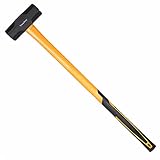
- 1. Ymachray 10 LB Sledge Hammer with Heavy Duty Construction — Best overall
- 2. NEIKO 02848A 3 LB Dead Blow Hammer — Best for heavy use
- 3. Klein Tools H80816 Straight-Claw Hammer with Smooth Head — Most versatile
- 4. DESHIL Sledge Hammer — Best for families
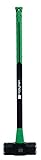
- 5. Hooyman 16lb Sledge Hammer with Heavy Duty Construction — Best premium
- 6. Edward Tools 16 oz. Oak Claw Hammer — Best budget pick
- Does "for beginners" mean anything in this category?
- Which head weight should a first hammer be?
- What the hammer listings do not tell you
- The verdict
- FAQ
The best heavy duty hammer for beginners is the Ymachray 10 LB Sledge Hammer, because a 10 lb head on a 35-inch fiberglass handle breaks concrete without asking you to swing a 16 lb monster. If your work is indoor carpentry instead, the Klein Tools H80816 with its 16-oz head and 13-inch handle is the smarter buy.
Most shoppers compare brands here. Brand is not what decides it. Head weight and handle material do, and those two numbers point at completely different jobs. A 3 lb dead blow and a 16 lb sledge are not competitors. They are different tools that happen to share a category.
Best heavy duty hammer for beginners at a glance
| Pick | Head weight | Handle | Price |
|---|---|---|---|
Best overall Ymachray 10 LB Sledge Hammer |
10 lb | 35 in fiberglass | Check Price |
Best for heavy use NEIKO 02848A 3 LB Dead Blow Hammer |
3 lb | 13.8 in molded poly | Check Price |
Most versatile Klein Tools H80816 Straight-Claw Hammer |
16 oz | 13 in fiberglass | Check Price |
Best for families DESHIL 3lb Sledge Hammer |
3 lb | fiberglass | Check Price |
Best premium Hooyman 16lb Sledge Hammer |
16 lb | 36 in fiberglass | Check Price |
Best budget pick Edward Tools 16 oz. Oak Claw Hammer |
16 oz | 11 in oak | Check Price |



How I screened these six heavy duty hammers
I started from published specifications only, and I compared the six listings side by side on the numbers each maker actually prints. Head weight, overall length, handle material, warranty. Nothing else survives contact with a real job.
Three things I refused to guess at. Steel hardness, because none of these listings state a Rockwell figure. Handle grain orientation on the wood-handled pick, because that is not published either. And face diameter, which only the NEIKO gives at 2.5 by 4.625 inches.
Here is what the screen actually rewarded:
- A stated head weight. All six state one, from 16 oz to 16 lb.
- A stated handle material. Five are fiberglass or molded poly. One is oak.
- A stated overall length. Four publish it. That matters more than it sounds, since length sets your leverage.
- A warranty in writing. Only two of six commit to anything.
The set that came through spans three category types: sledgehammers, dead-blow hammers and claw hammers. That spread is deliberate. A heavy duty hammer for beginners is not one product, and pretending otherwise is how people end up with a 16 lb sledge for hanging pictures.
What actually decides a heavy duty hammer purchase?
Head weight decides it. Everything else is secondary, and here is why the obvious specification misleads: heavier is not better, heavier is different. A 16 lb head delivers more energy per swing and fewer swings per hour, because your shoulders quit. A 3 lb head lets you place blows accurately for an hour straight.
The second criterion is rebound behaviour. A dead blow hammer is a hammer with shot inside the head that kills bounce-back on impact. NEIKO says its steel shot filled head eliminates rebound and spark. A steel sledge does the opposite: it bounces, and on a chisel that bounce goes into your wrist.
The third is handle material, which splits this field cleanly.
- Fiberglass appears on the Ymachray, the Hooyman, the DESHIL and the Klein. All four listings claim shock absorption from the core.
- Molded poly appears only on the NEIKO, whose unibody build means there is no head-to-handle joint to loosen.
- Oak appears only on the Edward Tools, at 11 inches of handle.
Handle length is the fourth, and it is the one most first-time buyers skip. The Hooyman runs 36 inches. The Ymachray runs 35 inches. The Klein and the Edward Tools both come in at 13 inches total. That is not a small difference in feel. It is the difference between a two-handed swing from the shoulder and a one-handed tap from the elbow.
1. Ymachray 10 LB Sledge Hammer with Heavy Duty Construction — Best overall
A 10 lb head on a 35-inch fiberglass handle is the most swingable real sledge in this group, and it is the only pick here carrying a lifetime guarantee from the maker.
Best for: breaking concrete or driving stakes with a full two-handed swing Skip it if: your work is indoors on trim, cabinets or drywall
Within this set, the Ymachray sits in the sweet spot on the two numbers that matter. Its 10 lb head is heavy enough to break slab and drive wedges, and it is 6 lb lighter than the Hooyman. The handle measures 35 inches, giving you nearly the same leverage as the 36-inch Hooyman with substantially less mass to control. Overall dimensions come in at 2.5 by 35 by 6.7 in.
Ymachray claims a bullet nose design delivering twice the concentrated striking force, a particulate-filled fiberglass core with a shock-absorbing collar to cut vibration, and a shatterproof handle. Those are the maker's words, not measured results. What I can verify from the listing is the geometry, the mass, and the lifetime guarantee, which no other pick in this group states in the same terms. Three sellers list it, more than any other pick here.
The trade-off is reach. At 35 inches this is an outdoor and demolition tool, and it will not fit in a tool belt or a drawer. It also sits near the top of the price positions in this set.
Pros:
- 10 lb head handles concrete and stakes
- 35-inch handle gives near-full sledge leverage
- Lifetime guarantee stated by Ymachray
- 6 lb lighter than the heaviest pick here
- Shock-absorbing collar claimed at the head joint
Cons:
- Too long at 35 in for indoor or belt use
- No nail-pulling claw of any kind
- Second-highest price position in this set
- Striking force claim is the maker's, not measured
2. NEIKO 02848A 3 LB Dead Blow Hammer — Best for heavy use
The only rebound-resistant pick here, and by a wide margin the one buyers choose most often in this group.

Best for: shop and automotive work where rebound would ruin the part Skip it if: you need to pull nails
This is the pick that does something none of the others can. NEIKO says the head is filled with steel shot, which adds force to the blow while eliminating rebound and sparks. On sheet metal, bearing races and drift pins, that dead stop is the whole point. A steel sledge bounces back at you; this does not.
The build is unibody molded poly, so there is no wedge or epoxy joint between head and handle to work loose over years of use. Head dimensions are given as 2.5 by 4.625 in, with an overall length of 14.375 in and a stated 3 lb head. The listed shipping dimensions read 0.24 by 4.61 by 13.8 in. NEIKO also claims a diamond-textured non-slip grip and points out that neon orange is easy to spot in a cluttered toolbox, which sounds trivial until you have set a hammer down on a black fender.
It sells faster here than any other pick, and it is the second-cheapest of the six. The trade-off: a polymer face will mark and eventually chew, and it cannot break masonry. This is a precision striking tool, not a demolition tool.
Pros:
- Steel shot head claimed to eliminate rebound and spark
- Unibody molded build with no head joint to loosen
- Second-cheapest of the six picks
- Sells faster than every other hammer here
- 14.375 in length works one-handed at a bench
Cons:
- No claw, so nail pulling is out
- 3 lb polymer face will not break concrete
- No warranty stated in the listing
- Only one seller lists it
3. Klein Tools H80816 Straight-Claw Hammer with Smooth Head — Most versatile
The single most useful pick in this set for someone buying one hammer, because 16 oz and a straight claw covers driving nails and pulling them.

Best for: a first and only hammer covering framing, nail pulling and assembly Skip it if: you plan to break masonry
Every other pick here does one job. This one does two, and that is what earns the label. The straight claw pries and pulls; the 16-oz smooth face drives. At 13 in overall it fits a tool belt, and the listed tool weight is 1 lb.
Klein calls out a high-strength fiberglass core under a molded overhandle for shock absorption, a two-shot overmold non-slip grip, and a tether hole in the handle. That last detail is genuinely practical if you ever work off a ladder. A straight claw, as opposed to a curved one, is the version that gets into framing gaps and lifts boards, which is why it is the more common choice on job sites.
Against the Edward Tools claw hammer, the difference is the core. Both are 16-oz heads at 13 in total length, but this one puts fiberglass between the steel and your palm while the other puts oak. The catch is the warranty line, which says to call the vendor rather than stating any term, and the listed dimensions of 1 by 1 by 1 in are clearly a placeholder rather than real measurements. It also costs more than either entry-priced pick without offering more head weight.
Pros:
- Straight claw pulls nails and pries boards
- 16-oz head at 13 in fits a tool belt
- Fiberglass core under two-shot overmold grip
- Tether hole for ladder and elevated work
- Only pick here that both drives and extracts
Cons:
- Warranty listed only as "call vendor"
- Published dimensions are a placeholder, not real
- 16 oz is far too light for demolition
- Costs more than both entry-priced picks
4. DESHIL Sledge Hammer — Best for families
A 3 lb forged steel drilling hammer that a household can share, because it swings one-handed but still hits like a sledge.

Best for: one-handed masonry work, stakes and chisel driving in a garage Skip it if: you want a published warranty
This is the compromise pick, and I mean that as a compliment. A drilling hammer is a short-handled sledge, so you get forged steel mass on a handle a smaller person can actually control. Head weight is 3 lb and total tool weight is listed at 4.15 lb, which tells you roughly 1.15 lb sits in the handle.
DESHIL claims a high-carbon forged steel head, a shock-absorbing non-slip fiberglass handle, and precision balancing for striking force. The colour is listed as silver with natural wood, so expect a two-tone finish rather than an all-black tool. Compared to the Ymachray, you give up 7 lb of head and a lot of reach. Compared to the NEIKO at the same 3 lb, you gain a steel face that can break brick and take a cold chisel, and you lose the dead blow behaviour entirely.
Where it falls short is documentation. There is no published overall length, no dimensions, and no warranty in the listing, which is a real gap when you are buying a striking tool. Only one seller stocks it. It sits mid-range for this set.
Pros:
- 3 lb forged steel head breaks brick and masonry
- Short handle makes sledge mass one-handed
- Fiberglass handle claimed shock absorbing
- Mid-range price position with a steel face
Cons:
- No warranty stated anywhere in the listing
- Overall length and dimensions not published
- Steel face rebounds, unlike a dead blow
- Only one seller lists it
5. Hooyman 16lb Sledge Hammer with Heavy Duty Construction — Best premium
The heaviest head and the longest handle in this group, plus a wet-weather grip that no other pick claims.

Best for: post driving and heavy demolition outdoors in wet weather Skip it if: you have never swung a sledge
At 16 lb, this is the serious end of the set. It is 6 lb heavier than the Ymachray and more than five times the head weight of the DESHIL. Overall dimensions run 3 by 36 by 8.25 in, making it the longest tool here by an inch. Colour is black and green, and the model dates to 2020.
The standout claim is the H-Grip, which Hooyman says turns tacky when wet to keep the handle secure in all conditions. If you are driving fence posts in the rain, that is the feature you actually care about. Hooyman also states the handle is interlocked and epoxy sealed into the eye of the head over a solid fiberglass core, which is the joint most likely to fail on a heavy sledge. There is a peg hole in the handle end for hanging storage, and the listing states a limited lifetime warranty.
One oddity: the listed weight reads 2.2 lb, which does not square with a 16 lb head, so treat that field as a shipping artifact rather than the tool's mass. This is the most expensive pick here, only one seller lists it, and it is the slowest seller of the six. It is also the least beginner-friendly thing in the group. A 16 lb head punishes bad form.
Pros:
- Heaviest head here at 16 lb for real demolition
- Longest handle at 36 in for maximum leverage
- Limited lifetime warranty stated in the listing
- H-Grip claimed to turn tacky when wet
- Epoxy-sealed head joint over solid fiberglass core
Cons:
- Most expensive pick in this set
- 16 lb is genuinely hard to control unpractised
- Listed weight of 2.2 lb contradicts the head weight
- Slowest seller of the six, with one seller only
6. Edward Tools 16 oz. Oak Claw Hammer — Best budget pick
The cheapest of the six and the only wood-handled pick, with a curved claw for lifting nails out clean.

Best for: occasional household jobs on the cheapest possible budget Skip it if: you want vibration damping or a listed warranty
If your budget sets the answer, this is it. It is the cheapest of the six, and its numbers match the Klein closely: a 16 oz head on an 11-inch handle for 13 in total length. Edward Tools claims a forged carbon steel head, a contoured anti-vibration oak handle, an etched grip pattern to stop slipping, and a curved claw.
The oak handle is the real point of difference in this set. A wood handle transmits more shock than a fiberglass core does, but it is also the only handle here you can replace yourself if it ever splits. Some people simply prefer the balance of wood, and a curved claw pulls nails with better mechanical advantage than a straight one, at the cost of prying ability.
The listing is thin. Beyond a 1 lb weight and a brown colour, there are no published dimensions, no model number, and no warranty. Two sellers stock it. It is also the slowest-moving claw hammer here by a wide margin. Against the Klein, you save money and lose the fiberglass core, the tether hole and the straight claw. That is a fair trade only if you use a hammer a few times a year.
Pros:
- Cheapest of the six picks
- 16 oz head on 13 in total length
- Curved claw pulls nails with good leverage
- Oak handle is user-replaceable if it splits
- Etched grip pattern resists slipping
Cons:
- No warranty stated in the listing
- Wood handle transmits more shock than fiberglass
- No published dimensions or model number
- Fewest published specifications in this set
Does "for beginners" mean anything in this category?
Not much, and it is worth being straight about that. None of these six listings mentions skill level anywhere. There is no beginner grade of steel and no novice-rated handle. What you can read off a specification sheet is mass, length and material, and those three things happen to correlate with how forgiving a hammer is.
So judge it yourself with three checks:
- Can you hold it out at arm's length for ten seconds? If not, the head is too heavy for your current strength.
- Does the handle fit your swing arc? A 36-inch shaft needs clear space behind you and above you.
- Does the face suit the material? Steel on masonry, polymer on finished parts, smooth steel on nails.
The best heavy duty hammer for beginners is the one whose head weight matches the job you actually have, not the heaviest one you can lift once. That is why I put the 10 lb Ymachray ahead of the 16 lb Hooyman despite the Hooyman being the more capable tool in stronger hands.
Which head weight should a first hammer be?
Head weight is the first number to settle, and this set gives you four clean tiers to choose between.
16 oz. The Klein and the Edward Tools. Nails, trim, furniture assembly, light demolition of thin material. This is the weight most households need and the only tier here that pulls nails.
3 lb. The NEIKO and the DESHIL. One-handed heavy striking. Chisels, drift pins, stakes, brick, sheet metal shaping. The NEIKO kills rebound; the DESHIL brings a steel face.
10 lb. The Ymachray. Two-handed demolition on a 35-inch handle. Slab breaking, wedge driving, fence posts.
16 lb. The Hooyman. Maximum energy per blow on a 36-inch handle. This tier is for people who already know how a sledge moves.
The cutoff worth remembering is 3 lb. Below it, you are placing nails and pulling them. At or above it, you are moving or breaking material, and no amount of technique makes a 16-oz claw hammer do that work. If you genuinely need both jobs covered, the honest answer is two hammers, not one compromise.
What the hammer listings do not tell you
Four gaps run across all six of these listings, and knowing them keeps you from over-reading a spec sheet.
Steel hardness is never stated. Two picks say forged carbon steel and one says high-carbon steel. None publishes a hardness figure, so you cannot compare face durability between them on paper.
Face diameter appears once. Only the NEIKO gives it, at 2.5 by 4.625 in. On a striking tool, face size affects how easily you hit what you aimed at, and five of six listings leave it out.
Warranty coverage is thin. The Hooyman states limited lifetime and Ymachray states a lifetime guarantee. The Klein says to call the vendor. The NEIKO, DESHIL and Edward Tools say nothing at all. That is three of six with no written commitment.
Listed weights are unreliable. The Hooyman's 16 lb head is listed at a 2.2 lb tool weight, and the Klein's dimensions read 1 by 1 by 1 in. Read the head weight in the product name, not the shipping field. Also worth noting on availability: four of the six are stocked by a single seller, with only the Ymachray at three and the Edward Tools at two.
The verdict
At the entry tier, the Edward Tools 16 oz. Oak Claw Hammer and the NEIKO 3 LB Dead Blow do different jobs for similar money, and the NEIKO is the better buy of the two unless you specifically need to pull nails. Its unibody molded build has no joint to loosen and it is the fastest-moving pick here.
In the middle tier, the Klein H80816 earns its place as the one hammer that both drives and extracts, with a fiberglass core and a tether hole the DESHIL cannot match. The DESHIL wins only if you need a steel face on a short handle for masonry.
At the premium tier, the Ymachray 10 LB Sledge takes the overall win. A 10 lb head on a 35-inch handle is real demolition capability that most people can still control for a full afternoon, and the lifetime guarantee is the strongest coverage stated in this set. The Hooyman's exact advantage is raw output: 6 lb more head, an inch more handle, and a grip claimed to get tackier in the rain. Buy the Hooyman if you drive posts for a living. Buy the Ymachray if you break things a few times a year.
FAQ
Is a heavy duty hammer worth buying over a standard claw hammer?
A heavy duty hammer is worth it only when your work involves breaking or moving material rather than fastening it. A 16-oz claw hammer drives nails and pulls them. A 3 lb to 16 lb head breaks brick, drives stakes and moves stubborn parts. If everything you do is trim, drywall and assembly, the Klein H80816 covers you at 16 oz.
What is the best heavy duty hammer for beginners on a tight budget?
The best heavy duty hammer for beginners on a tight budget is the NEIKO 02848A, the second-cheapest pick here and the one buyers choose most often in this group. Its 3 lb steel-shot head is claimed to eliminate rebound, which is more forgiving on your wrist than a steel sledge. The Edward Tools oak claw hammer costs less still, but it is a nail hammer, not a striking tool.
How does head weight affect control on a heavy duty hammer?
Head weight affects control directly: more mass means more energy per blow and fewer accurate blows per hour. This set spans 16 oz to 16 lb. The Ymachray at 10 lb sits where most people can still swing repeatedly, while the Hooyman at 16 lb rewards practised form. If you cannot hold the head out at arm's length for ten seconds, it is too heavy.
Ymachray 10 lb or Hooyman 16 lb: which sledge should I pick?
Between the Ymachray 10 lb and the Hooyman 16 lb, pick the Ymachray unless you swing a sledge regularly. It gives up 6 lb of head and one inch of handle, both of which make it easier to place accurately over a long session. The Hooyman's 36-inch shaft, epoxy-sealed head joint and wet-tacky H-Grip suit outdoor post driving in poor weather.
What mistake do first-time heavy duty hammer buyers make most often?
The mistake first-time heavy duty hammer buyers make is buying on head weight alone and ignoring face material. A steel face rebounds, which is fine on concrete and painful on a chisel or a finished panel. A polymer dead blow face stops dead but cannot break masonry. Match the face to the material you are striking, then pick your weight tier.
Start by writing down the single heaviest job you expect this hammer to do in the next year. If that job is nails, buy 16 oz and stop reading. If it is brick, stakes or slab, the Ymachray 10 LB Sledge is the default I would hand a first-time buyer, because its 35-inch fiberglass handle gives you sledgehammer leverage without the 16 lb learning curve that sends most people back to the store. Add the NEIKO dead blow later when a job needs force without rebound. Two hammers cover almost everything a home or garage will throw at you.