Best Framing Hammer for Mechanics and Shop Work
Five framing hammers compared on head weight, handle material and claw design, with a clear winner for shop use and three conditions that flip the pick to something else.

By Dexter GillUpdated 15 min read
On this page
- Best framing hammer for mechanics at a glance
- How I cut a long list down to five framing hammers
- Does a framing hammer belong in a mechanic's toolbox?
- Ounces or handle length: which one actually decides it?
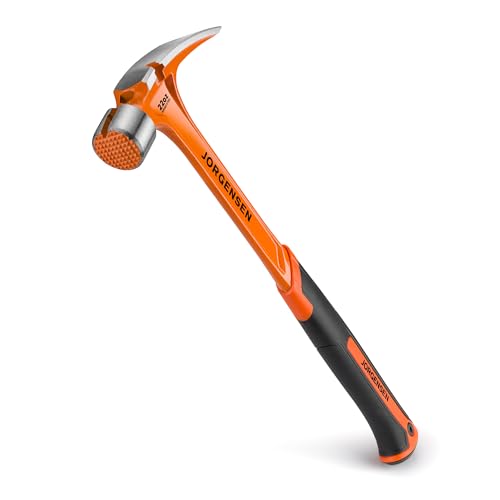
- 1. JORGENSEN 22 oz One-piece Forged Framing Claw Hammer — Best overall
- 2. Spec Ops Tools Framing Hammer — Best for heavy use
- 3. ESTWING Framing Hammer E3-22SM — Best premium
- 4. Klein Tools H80920H Milled Face Framing Hammer — Best for families
- 5. ESTWING Sure Strike California Framing Hammer — Best budget pick
- Milled face or smooth: what the difference costs you
- What owning one actually involves
- The verdict
- FAQ
The best framing hammer for mechanics is the Jorgensen 22 oz one-piece forged claw hammer, because a single forged body with a shock-absorbing grip survives the abuse a shop floor delivers. If you swing all day and want less strain, the Spec Ops 22 oz at 1.38 lb total is the better buy. Most buyers compare ounces alone. That number tells you almost nothing about how the tool feels after the fortieth strike.
Handle length, head geometry and grip material change the felt weight more than the stamped ounces do. Two 22 oz hammers here differ by nearly a pound on the scale.
Best framing hammer for mechanics at a glance
| Pick | Head weight | Handle & face | Price |
|---|---|---|---|
| 22 oz | One-piece steel, shock-absorbing grip | Check Price | |
Best for heavy use Spec Ops Tools Framing Hammer, Milled Face |
22 oz | 1.38 lb total, milled face | Check Price |
Best premium ESTWING Framing Hammer E3-22SM |
22 oz | 2.2 lb total, milled face | Check Price |
Best for families Klein Tools H80920H Milled Face Framing Hammer |
20 oz | Hickory, milled face | Check Price |
Best budget pick ESTWING Sure Strike California Framing Hammer |
25 oz | Hickory, milled face | Check Price |



How I cut a long list down to five framing hammers
Three things knocked candidates out before I compared anything else.
First, curved claws. A curved-claw hammer is a finish tool. Every hammer that survived here uses a rip or straight claw, which is what lets you pry a board apart or lever a bent nail out of a bracket. That single design choice removed most of the category.
Second, heads under 20 oz. Below that, you're driving trim nails, not framing nails, and the tool stops earning its place in a heavy toolbox. The lightest head in this set is the Klein at 20 oz. The heaviest is the Estwing Sure Strike at 25 oz.
Third, listings with no published head weight or handle material. If the two figures that decide the swing aren't stated, there's nothing to compare.
What survived is a set of five that spans a real range:
- Head weights from 20 oz to 25 oz
- Total weights from 1.38 lb to 2.2 lb, a difference of well over half a pound
- Two one-piece steel bodies, two hickory handles, one composite grip
- Three with magnetic nail starters, two without
- Two with a stated warranty, three with none published
That last line matters more than it looks. Only the Spec Ops publishes a limited lifetime warranty outright; the Klein listing says to call the vendor.
Does a framing hammer belong in a mechanic's toolbox?
Here's the honest answer: none of these five is built or sold for automotive work. Amazon's search returned framing hammers because that's the phrase, but the qualifier "mechanics" isn't something any of these listings addresses. No spec here mentions engine bays, sheet metal or bodywork. So judge that fit yourself, against your own bench.
What a framing hammer does bring to a shop is mass and a claw that pries. A 22 oz to 25 oz head drives a stubborn pin, seats a bearing race through a drift, and knocks a seized bracket loose in a way a 16 oz claw hammer won't. The rip claw levers wood, sheet stock and trapped fasteners.
What it isn't:
- A body hammer. A milled face will chew painted or plated surfaces.
- A dead blow. Steel on steel rebounds and marks.
- A ball-peen substitute. Different face geometry, different job.
So the practical read is this. Buy one of these for framing, demolition, crating and general shop persuasion. Keep a soft-faced hammer and a ball-peen alongside it for anything you don't want scarred. The best framing hammer for mechanics is really the best framing hammer that also survives a shop, and that's a durability question.
Ounces or handle length: which one actually decides it?
Head weight gets all the attention. Handle length and total weight decide how you feel at the end of the day.
Look at the Spec Ops and the Estwing E3-22SM. Both stamp 22 oz. The Spec Ops lists 1.38 lb total; the Estwing lists 2.2 lb. That's a gap of more than 13 oz between two hammers with the same nominal head weight, and it comes from what's behind the head. Spec Ops says the head is 25% lighter and the balance shifts the mass forward for control.
Then there's reach. The Estwing E3-22SM measures 1.5 x 16 x 5.75 in and the listing calls the handle extended for leverage. The Sure Strike runs 1.5 x 17.8 x 6.13 in, longer again. A longer handle multiplies the same head weight into a harder hit, which is why the 25 oz Sure Strike with a 17.8 in body hits harder than its ounces suggest.
The practical rule I'd use:
- Short swings, overhead, confined spaces: lower total weight wins. Spec Ops.
- Full swings, framing lumber, demolition: longer handle wins. Sure Strike or Estwing E3-22SM.
- Mixed shop work: middle ground. Jorgensen or Klein.
1. JORGENSEN 22 oz One-piece Forged Framing Claw Hammer — Best overall
A one-piece forged body with a magnetic nail starter and a straight rip claw, at the second-lowest price position here.
Best for: shop and site work where one hammer has to do everything Skip it if: you want a wood handle you can replace
This is the pick I'd put in a general toolbox first. The reason is construction. Jorgensen says the hammer is forged from one piece of heat-treated carbon steel, so there's no head-to-handle joint. On a wood-handled hammer, that joint is the first thing to loosen after a season of prying, and a loose head on a 22 oz tool is a real hazard.
The 22 oz head sits in the middle of this set, lighter than the 25 oz Sure Strike and heavier than the 20 oz Klein. That's the weight I'd want for mixed work: enough mass to sink a framing nail, not so much that a long afternoon punishes your forearm.
The listing describes a built-in magnetic nail starter for one-handed setting, and a shock-absorbing grip that damps vibration. The straight rip claw is stated for pulling nails and ripping nailed boards apart, which is the demolition side of the job.
The trade-off against the Estwing pair is name and provenance. Estwing publishes a made-in-USA claim and a patented grip; Jorgensen publishes neither. It also gives up the Spec Ops warranty. What it gives back is a lower price position than three of the four others.
Pros:
- One-piece forged carbon steel, no head-to-handle joint
- 22 oz head suits both driving and demolition
- Magnetic nail starter for one-handed setting
- Second-cheapest of the five
- Straight rip claw stated for board ripping
Cons:
- No warranty published on the listing
- No total weight or dimensions listed, so reach is unknown
- Handle can't be replaced if damaged
- Only two sellers list it
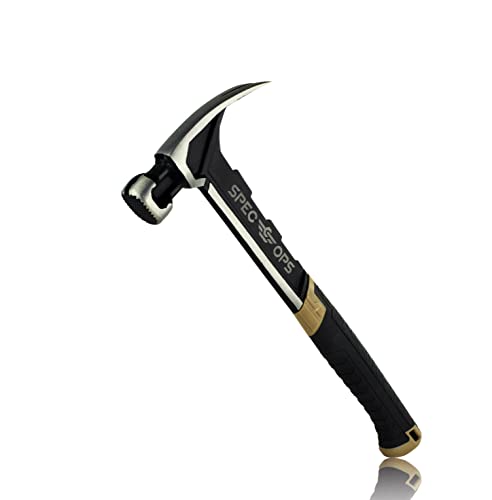
2. Spec Ops Tools Framing Hammer — Best for heavy use
The lightest hammer in the set at 1.38 lb total, and the only one with a stated limited lifetime warranty.
Best for: long swinging sessions and overhead work Skip it if: you want the heaviest head in the set
This one wins on fatigue. At 1.38 lb total with a 22 oz nominal head, it's 0.82 lb lighter than the Estwing E3-22SM despite the same stamped head weight. Over a few hundred swings, that difference is the whole story. Spec Ops attributes it to a head it describes as 25% lighter, with the mass balanced forward for striking power.
The milled face is stated to bite the nail head and reduce glancing blows. There's a magnetic nail starter for single-handed driving, and the listing notes compatibility with retention lanyards, which matters if you ever work above ground level or over an open engine bay.
The warranty is the quiet differentiator. Spec Ops publishes a limited lifetime warranty with a contact address on the listing. Klein says to call the vendor. The other three publish nothing at all. For a tool you plan to abuse, a stated warranty is worth more than a marketing line.
Where it loses: it sits in the middle price position, above both the Jorgensen and the Sure Strike, and the listing publishes no handle length or overall dimensions. If you want maximum driving force per swing, the 25 oz Sure Strike on a 17.8 in handle beats it.
Pros:
- Lightest total weight here at 1.38 lb
- Only pick with a stated limited lifetime warranty
- Milled face for grip on nail heads
- Magnetic nail starter and lanyard compatibility
Cons:
- No published handle length or overall dimensions
- Mid price position, above two cheaper picks
- Lighter head means less force per swing than the 25 oz option
- Composite grip can't be replaced like hickory
3. ESTWING Framing Hammer E3-22SM — Best premium
A solid one-piece steel hammer with a patented grip and a stated 70% vibration reduction, at the highest price position here.

Best for: buyers who want one steel hammer for decades Skip it if: budget is the deciding factor
This is the hammer people inherit. Estwing states the tool is forged from a single piece of solid steel and made in Rockford, Illinois, with production dating back to 1923. Combined with the 2.2 lb total weight, that reads as a tool built with material left over rather than shaved off.
That mass is a feature and a cost. At 2.2 lb it's the heaviest here by 0.4 lb over the Klein and 0.82 lb over the Spec Ops. Full swings into framing lumber feel effortless. Half an hour of overhead work does not.
The grip is the headline claim: Estwing's patented Shock Reduction Grip, which the listing says cuts impact vibration by 70%. That's the manufacturer's figure, not a measured one, but the grip is the reason this design has stayed on the market. The face is milled for traction on nail heads, and at 1.5 x 16 x 5.75 in the handle is stated as extended for leverage.
The clear loss is price. It's the most expensive pick here, and it publishes no warranty and has only one seller listing it. It also lacks the magnetic nail starter that three of the five include.
Pros:
- One-piece solid steel, made in Rockford, Illinois
- Patented grip with a stated 70% vibration reduction
- 16 in handle stated as extended for leverage
- Milled face for traction on nail heads
Cons:
- Most expensive pick here
- Heaviest at 2.2 lb, tiring overhead
- No magnetic nail starter
- No published warranty, and only one seller lists it
4. Klein Tools H80920H Milled Face Framing Hammer — Best for families
A 20 oz hickory-handled hammer with the largest strike face in the set and nail pullers on both sides.

Best for: shared toolboxes and occasional users Skip it if: you need the most published specifications
The 20 oz head is the lightest here, and that's exactly why this is the one I'd hand to someone who doesn't swing a hammer every day. Less mass means less momentum to control and less damage when a strike goes wrong.
Klein leans on the face. The listing describes an extra-large squared strike face to maximise contact area and cut missed strikes, milled for grip. Pair that with a 20 oz head and you get a forgiving tool. It also lists dual side nail pullers for leverage in tight spots, which no other pick here mentions, plus a magnetic nail starter.
The handle is genuine hickory in the California framing style, which the listing describes as a curved axe-style profile for comfort and control. Hickory has a real advantage over steel and composite: if you split it, you replace it rather than the whole tool.
Total weight is 1.8 lb and the listing gives 5.32 x 16.1 x 14.4 in. Where it stumbles is price and support. It sits in the highest price group alongside the Estwing E3-22SM, yet the warranty entry only says to call the vendor. For that money I'd want a written term.
Pros:
- Lightest head at 20 oz, forgiving for occasional users
- Extra-large squared milled face for fewer missed strikes
- Dual side nail pullers, unique in this set
- Replaceable hickory handle in California framing style
Cons:
- Premium price position without a stated warranty term
- 20 oz head drives framing nails more slowly than a 25 oz
- Only one seller lists it
- Wood handle loosens over time with heavy prying
5. ESTWING Sure Strike California Framing Hammer — Best budget pick
The heaviest head and longest handle in the set, at the lowest price position of the five.
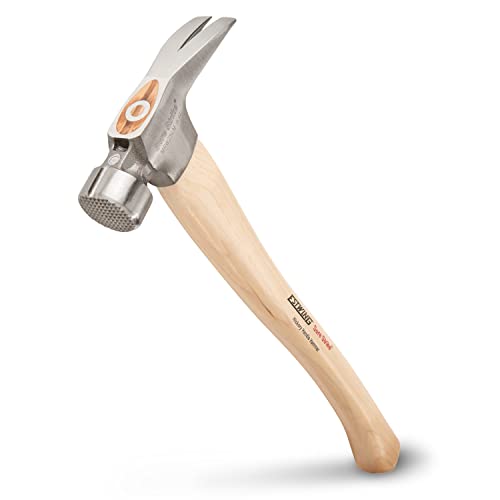
Best for: heavy demolition on a tight budget Skip it if: you dislike wood handles or want a warranty
Pure physics makes this the hardest hitter here. The 25 oz head is 3 oz heavier than the three 22 oz picks and 5 oz heavier than the Klein. It sits on the longest body in the set at 17.8 in overall. More mass on a longer lever means more energy at the nail, and it's the cheapest of the five.
Estwing states the head is forged under high pressure for strength, and the handle is genuine hickory chosen for a lightweight feel that conforms to the grip. Total weight comes in at 1.6 lb, which is lower than both the Klein and the E3-22SM despite the bigger head. The mass sits where it works.
The listing is thin, though. Two feature bullets, no warranty, no magnetic nail starter, and the slowest seller of the five by a wide margin. There's no mention of a shock-reduction grip, and on a wood-handled hammer that means vibration goes into your hand.
The other honest catch is control. A 25 oz head on a long handle punishes bad technique. For someone driving nails all day it's an advantage. For a shop where the hammer gets picked up twice a week, the Klein or the Jorgensen is easier to aim.
Pros:
- Heaviest head at 25 oz for maximum driving force
- Longest body at 17.8 in for extra leverage
- Cheapest of the five
- Replaceable hickory handle, 1.6 lb total
Cons:
- No magnetic nail starter
- No published warranty and no shock-reduction grip claim
- 25 oz head is harder to control for occasional users
- Thinnest listing here, and the slowest seller of the five
Milled face or smooth: what the difference costs you
Four of the five picks here specify a milled face. The Jorgensen doesn't. That's not a small detail.
A milled face is cut with a waffle pattern that grips the nail head and stops the hammer skating off on an angled strike. On framing lumber that's a straight win. It also means the face leaves a waffle print on anything it touches.
That's the part shop buyers need to think about. A milled face will mark a painted panel, a plated bracket or a finished surface, and it won't come out. If your hammer is going to touch anything cosmetic, a smooth face is the safer choice, which is a point in the Jorgensen's favour beyond its price.
So the split is simple:
- Framing, sheathing, demolition, crating: milled face. Spec Ops, Estwing, Klein, Sure Strike.
- Anything visible or plated: smooth face, or a soft-faced hammer entirely. Jorgensen.
What owning one actually involves
A framing hammer needs almost nothing, but the two handle types age differently.
Steel bodies like the Jorgensen and the Estwing E3-22SM ask for one thing: keep the grip clean. Oil and solvent soften rubber grips over time, and a slick grip on a 2.2 lb tool is genuinely dangerous. Wipe it down, and replace the tool if the grip goes tacky.
Hickory handles on the Klein and the Sure Strike need a look every few months. Check where the wood meets the head for movement, and check the shaft for hairline splits behind the head, which is where prying loads concentrate. A hickory handle is replaceable, and that's the argument for wood.
Two habits apply to all five. Don't strike another hammer or a hardened surface with the face, because chips fly. And don't use the claw as a pry bar with a pipe over the handle, which is the fastest way to bend a claw or crack a shaft.
The verdict
Three tiers, three different buyers.
At the bottom of the price range, the Estwing Sure Strike is the value play: 25 oz on a 17.8 in handle, the heaviest head and longest lever here, for the lowest price position of the five. You give up a magnetic nail starter, a published warranty and any shock-reduction claim. If you swing well and want raw driving force per dollar, take it.
In the middle sits my winner. The Jorgensen 22 oz is one-piece forged carbon steel with a shock-absorbing grip and a magnetic nail starter, at the second-lowest price position here. No head-to-handle joint to loosen, a smooth face that won't waffle-print a painted surface, and a middle-of-the-road 22 oz head that handles both driving and demolition. That combination is why it's the best framing hammer for mechanics working across mixed jobs.
At the top, the Estwing E3-22SM buys you provenance and comfort: single-piece Rockford steel, a patented grip with a stated 70% vibration reduction, and a 16 in handle for leverage. It's the most expensive pick and the heaviest at 2.2 lb.
The cutoff is how often you pick it up. Daily, spend up or go heavy. Weekly, the Jorgensen is enough.
FAQ
Is the best framing hammer for mechanics worth paying premium prices for?
The best framing hammer for mechanics doesn't need a premium price to be worth owning. The Jorgensen sits at the second-lowest price position here and still delivers one-piece forged steel, a magnetic nail starter and a shock-absorbing grip. Paying more buys the Estwing's patented grip and stated 70% vibration reduction, which matters if you swing daily rather than weekly.
How much difference does head weight really make?
Head weight makes a real difference, but less than total weight and handle length. This set spans 20 oz to 25 oz, a 5 oz gap. Total weight spans 1.38 lb to 2.2 lb, a much larger spread. The Spec Ops and Estwing E3-22SM share a 22 oz head yet differ by 0.82 lb overall, which is what your arm actually feels.
Jorgensen or Spec Ops: which should I pick?
Jorgensen or Spec Ops comes down to session length and support. The Jorgensen costs less and uses one-piece forged steel with a smooth face that won't mark finished surfaces. The Spec Ops weighs 1.38 lb total, the lightest here, and it's the only pick with a stated limited lifetime warranty. Long days and overhead work favour the Spec Ops.
Can I use a framing hammer on sheet metal or painted parts?
You should not use a framing hammer on painted or plated parts. Four of these five have milled faces that grip nail heads by biting into them, and that same pattern stamps a permanent waffle print into any finished surface. The smooth-faced Jorgensen is gentler, but a soft-faced or body hammer is the right tool for cosmetic work.
What's the most common mistake when buying a framing hammer?
The most common mistake when buying is choosing on stamped ounces alone. Two 22 oz hammers here differ by more than 13 oz in total weight, and handle length ranges from 16 in to 17.8 in. Both change how hard the tool hits and how tired you get. Check total weight, handle length and face type together.
Start with the Jorgensen 22 oz. It's the pick that asks the least of you: no joint to loosen, a smooth face that won't scar a painted bracket, a nail starter for one-handed work, and a price position below three of the four others. If most of your swinging is demolition and framing, jump to the 25 oz Sure Strike and pocket the difference. If your hands take a beating already, spend up on the Estwing E3-22SM for its grip. Whichever you choose, keep a soft-faced hammer nearby for anything you care about the look of.